Introduction
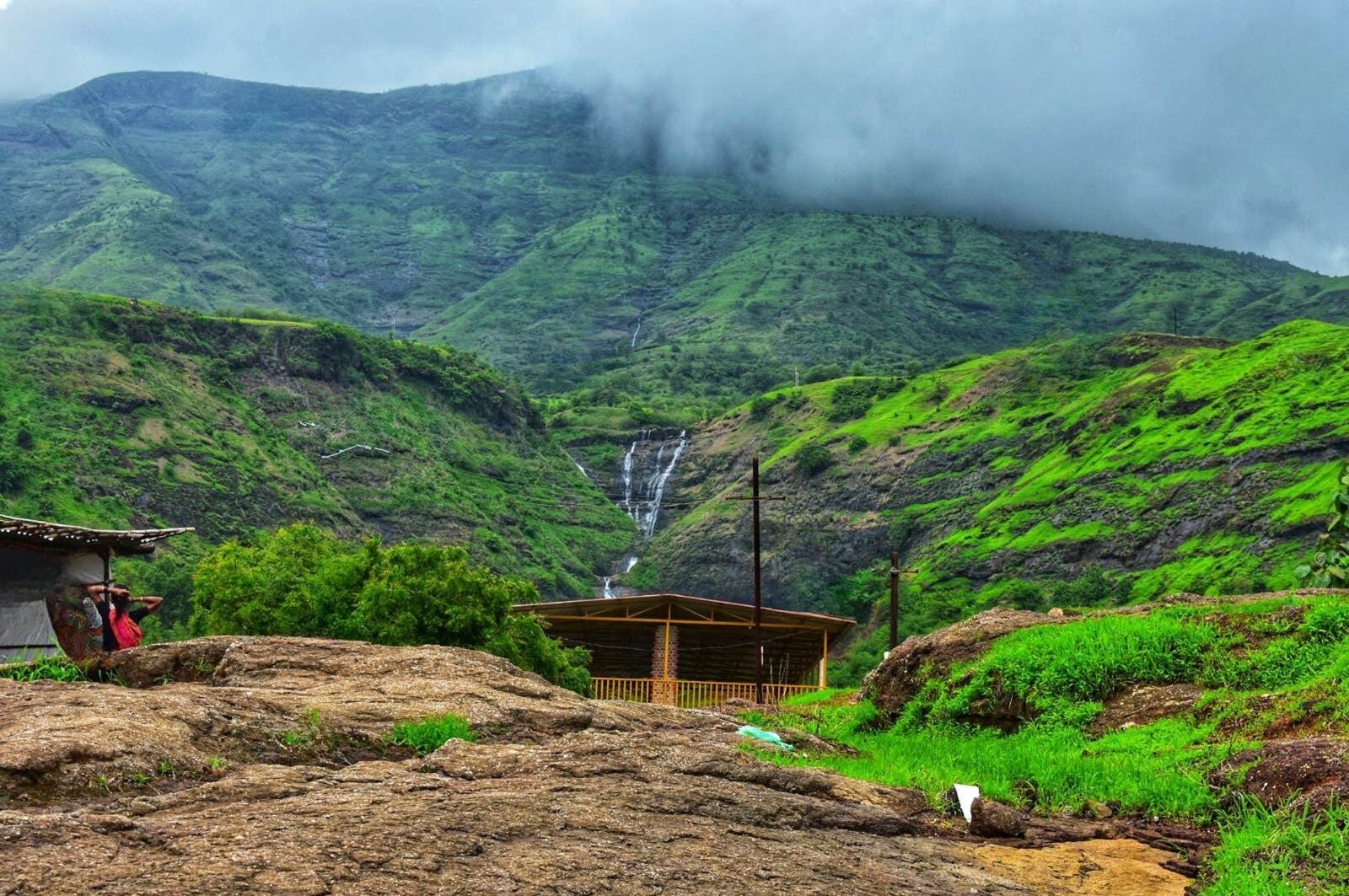
Some waterfalls demand a long expedition to reach them. Bhivapuri isn't one of them — and that's exactly what makes it so special. Tucked away about 90 km from Mumbai in the Karjat region of Maharashtra, this stunning 115-ft cascade tumbles down from the Matheran hill range, surrounded by dense forest, rolling Sahyadri hills, and that intoxicating smell of wet earth that only monsoon can bring. It is a hidden gem that quietly draws nature lovers and adventure seekers season after season.
What makes Bhivapuri truly worth the trip is how much it packs into one place. You can swim in cool brooks, rappel down the waterfall, go trekking through forest trails, or simply sit at the base of the falls and let the mist do its thing. The trek from Bhivapuri railway station is easy and beginner-friendly — just 30 to 40 minutes through scenic hills and valleys. Whether you are a first-time trekker, a weekend escapee, or someone who just needs to hear the sound of falling water for a few hours — Bhivapuri delivers every single time.
History
Bhivpuri doesn't have the kind of history that fills textbooks. No battles were fought here. No kings built forts on its ridgelines. And yet, this small pocket of the Karjat valley carries a quieter, older kind of story — one written not by people but by the land itself.
The village of Bhivpuri sits inside what was once deeply tribal territory, where the Sahyadri foothills were home to communities who lived with the rhythm of the mountains long before the word "tourism" existed anywhere near this region. The waterfall — known locally by the alternate name Ashane Waterfall, after the nearby village of Ashane where it originates — was simply part of life for generations of people who farmed these slopes and collected water from these streams. It didn't need a name on a map. Everyone already knew where it was.
What changed things, quietly and gradually, was the railway. When the Central Railway line widened through Karjat and a station appeared at Bhivpuri Road, the falls suddenly had a front door that the rest of Maharashtra could walk through. Weekend visitors from Mumbai started showing up in small numbers at first — then larger ones. Word passed between friends, the way it always does with places that haven't been written about yet. Bhivpuri stayed unhurried even as it grew more visited. The village adjusted, locals set up food stalls along the trail, and the falls kept falling — indifferent, as waterfalls always are, to how many people had come to watch.
Today the name Bhivpuri means something specific to an entire generation of Mumbai trekkers — a first waterfall, a monsoon memory, a trail walked on a whim that turned into an annual tradition. That is the only history that really matters here.
Climate & Weather
Bhivpuri Waterfall enjoys a classic Konkan climate—lush, tropical, and wonderfully dramatic during the rains.
The monsoon (June to September) is prime time: steady showers turn the cascade thunderous, the hills glow emerald, and temperatures hover around 22–28°C. Expect slippery trails, occasional fog, and sudden downpours—carry a rain jacket, quick-dry shoes, and a waterproof cover for your phone.
Post-monsoon (October to November) is serene and scenic. The weather stays pleasant, the flow remains strong, and skies clear up for aesthetics photos.
Winter (December to February) is cool and cozy, around 18–26°C, ideal for relaxed hikes and picnics, though the waterfall is gentler.
Summer (March to May) brings warm, humid days, 28–35°C. The pool is refreshing, but the falls can thin out, especially by late May. Start early, pack extra water, and wear sun protection.
Best time to visit: monsoon for raw, roaring beauty; post-monsoon and winter for safer trails, clear views, and easy travel. Check the local forecast if you’re visiting in peak rains—water levels can rise quickly. No matter the season, lightweight clothing, sturdy grip footwear, and a small first-aid kit make the experience smoother and safer.
Transportation
Please select a transportation mode to view details
Facilities
Food & Refreshment
- Local Stalls & Vendors: Along the trekking path from the station and near the base of the waterfall, numerous small shacks and tapris sell quick refreshments like roasted corn (bhutta), Maggi, coconut water, tea, and packaged snacks.
- Village Kitchens / Thalis: Local villagers offer authentic, home-cooked Maharashtrian lunch thalis (both vegetarian and non-vegetarian, often featuring local chicken or pitla bhakri) on an advance-order basis as you pass through the village.
Changing & Restroom Facilities
- Dedicated Changing Rooms: Recognizing the needs of waterfall visitors, several villagers run basic, paid changing rooms and washrooms at the base village.
- Baggage Storage: Some local village setups provide temporary bag counter/storage facilities for a nominal fee so you can enjoy the water hands-free.
Parking
- Vehicle Parking Lots: For those traveling by car or bike, there are dedicated, paid parking spaces managed by the local village authorities near the entrance/trekking base.
Accommodation
- Resorts & Farmhouses: While there are no luxury hotels directly at the waterfall, the surrounding Bhivpuri and Karjat area features several pocket-friendly resorts, agri-tourism farms, and private pool villas (such as Angel Resort, Bhivpuri Farms, and various farmhouses) offering proper overnight stays and full meal plans.
Adventure services
- Guided Activities: During peak monsoon months, professional adventure groups set up operations at the main drop for organized waterfall rappelling and trekking tours. Local guides are also available at the base to assist with navigation.
Geographical Information
Have you ever wondered people from Mumbai where they go when city life gets too loud and Karjat almost always comes up. Bhivpuri sits right in the heart of that answer. Part of the Karjat taluka in Raigad district, this waterfall destination falls roughly 67 km from Mumbai and about 107 km from Pune genuinely doable as a day trip without needing to plan much ahead. The geography behind it is what gives the place its dramatic character. The Matheran hill range rises sharply to form a natural wall, and Bhivpuri village sits right at its base small, unhurried and almost completely swallowed by the kind of greenery that only the Sahyadri knows how to grow. Karjat town is just minutes away, Matheran is visible on clear days from the higher trails, and the ancient Kalavantin Durg looms in the distance for those who look up at the right moment.
You get the geography lesson without ever feeling like one when you take a walk to the waterfall. Flat stretches of farmland give's way to narrowing forest paths, the Air density thickens with moisture, and somewhere along the way the ground starts rising below your feet. Clean drop of water which falls in stages, breaking across rock ledges and carving out waist-deep pools that sit in the shade of overhanging trees. Monsoon, predictably, is when everything here goes to another level entirely. June through September, the hills around Bhivpuri throw up new waterfalls every few days thin ribbons of white appearing between patches of dark green as if the mountain simply cannot hold all that water anymore. When winter come's, the chaos settles into something quieter cool mornings, skies are clear, and dry enough trails to finally walk without sliding.
Culture & Local Lifestyles
Bhivpuri is not a place that performs its culture for visitors. What exists here is something far more real — a community living exactly as it always has, on its own terms, at its own pace. Spending time here and actually paying attention to everything around the waterfall will quietly become one of the most memorable parts of your trip.
Traditions
The villages around Bhivpuri — particularly Ashane and Umbroli — are home to Koli and Agri communities whose traditions run deep into the land and the river.
- Land & water rituals — Farming and fishing have shaped everything here. Rituals tied to the monsoon, the harvest, and the river are observed with genuine sincerity — not as performances but as a natural part of daily living
- Monsoon significance — Water holds special cultural importance in this region, which feels entirely fitting for a community that has lived alongside a waterfall for generations
- Community bonding — Major life events — births, harvests, weddings — are celebrated as a collective. The entire village participates, not just the family involved
- Respect for nature — Locals have a deeply rooted relationship with the forest, the hills, and the river. Cutting trees or disturbing natural water sources is considered genuinely disrespectful, not just legally wrong
Festivals
The local culture around Bhivpuri comes most alive during festival seasons. If your visit lines up with any of these — you are genuinely lucky.
- Ganesh Chaturthi — The biggest celebration of the year. Streets fill with processions, dhol beats echo off the hillsides, and the entire community comes together in a way no other festival replicates. A must-experience if you are visiting in August or September
- Navratri — Nightly Garba and Dandiya gatherings spill out into open village grounds under the stars. Colourful, energetic, and completely open to visitors who join respectfully
- Holi & Diwali — Celebrated with the kind of warmth that only smaller, tightly knit communities can pull off. Diwali evenings in the village feel genuinely different from anything you experience in the city
- Harvest festivals — Smaller, local harvest celebrations tied to the farming calendar happen quietly through the year — and are among the most authentic cultural experiences you can witness here
Daily Life
Life in Bhivpuri moves at its own rhythm — slow, deliberate, and completely indifferent to city deadlines.
- Early mornings — The day begins well before sunrise. Fields need tending, water needs collecting, and the village is already fully awake by the time most Mumbai visitors are still sleeping
- Local food culture — Fresh rice, river fish, seasonal vegetables, and simple Konkani home cooking that carries more flavour than anything a city restaurant could replicate. Roadside stalls along the trail serve hot food to trekkers and locals alike — always try what the locals are eating
- Language & communication — Marathi is the language of everything here — directions, negotiations, and the warm greeting you will almost certainly receive from someone who notices you looking slightly lost on the trail
- Pace of life — Nobody here is in a hurry. Shops open when they open. Conversations take as long as they take. Spending even a few hours inside that pace — away from notifications and city noise — is a cultural experience in itself
- Self-sufficient community — The people of Bhivpuri do not depend on tourism to live well. The waterfall visitors are welcome, but the community was thriving long before the trekkers arrived — and that quiet self-sufficiency is something worth noticing and respecting
Food and Local Cuisine
Here is the honest truth about eating near Bhivpuri — you will not find a rooftop café with a curated menu and a QR code. What you will find is better. A woman frying vada pav on a tawa that has seen a thousand monsoons. A dhaba with three items on the menu, all of them exactly right. Food that doesn't try to impress you and ends up doing exactly that.
Famous Dishes
Konkani and Maharashtrian roots run deep in every dish served around this region — and the flavours show it.
- Sol Kadhi — Kokum and coconut milk, blended into a cooling pink drink that locals have after every meal. One sip after a long trek and you will understand why it has never gone out of fashion
- Fish Curry & Rice — River fish cooked in a deep red coconut gravy, served over soft steamed rice. The kind of meal that makes you go quiet mid-bite
- Bhakri with Pitla — Thick jowar flatbread paired with spiced gram flour curry. Farmers have been eating this for generations — there is a reason it never left the menu
- Tambda Rassa — A fiery red mutton curry that appears during festivals and family gatherings. Order it if you see it. Don't ask questions. Just order it
Street Food
The real best food in Bhivpuri has no address — just a stall, a gas flame and someone who has been doing this since before you were born.
- Vada Pav — Crispy vada, soft pav, green chutney with just enough fire. The version near Karjat and Bhivpuri station is the kind that ruins all other vada pavs for you permanently
- Corn on the Cob — Coal roasted, lemon squeezed, chilli rubbed. Eaten standing up on a muddy trail in the rain. Somehow the best corn you have ever had
- Bhel Puri & Poha — Morning stalls serve hot poha and cutting chai before the trail gets busy. Afternoon stalls serve bhel puri after. Both are exactly what you need at exactly the right time
Restaurants & Cafes
- Trail dhabas — No menu board, no Wi-Fi, no problem. Sit down, ask what's cooking and eat whatever arrives. You will not regret it
- Karjat town — A short ride away with full Maharashtrian thalis, South Indian breakfast spots and local non-vegetarian restaurants that won't dent your wallet
- Riverside resorts — If you are making a full day of it, several resorts near Karjat serve proper Konkani sit-down meals that pair beautifully with the view
Accommodation
Let's be straightforward about something — Bhivpuri is not a hotel district. It is a waterfall village. You are not coming here for thread-count sheets and a pillow menu. But that doesn't mean you sleep badly. It means you sleep differently — and honestly, for most people who make this trip, differently turns out to be better.
The best accommodation for Bhivpuri sits in and around Karjat, which is just minutes away and gives you a proper base without pulling you too far from the trail. Here is what your options actually look like.
Budget Hotels
Budget stays near Bhivpuri are no-frills and completely unapologetic about it. Clean rooms, basic amenities, a fan or an AC depending on what you pay — and usually a small eatery attached that serves hot food at hours that actually make sense for trekkers.
- Perfect for solo travellers and groups who are here for the trail, not the room
- Most budget stay options sit close to Karjat railway station — walkable distance, zero fuss
- Expect to find honest value — not luxury, not disappointment
Mid-Range Hotels
This is the sweet spot for most visitors. Mid-range hotels in and around Karjat offer decent rooms, reliable hot water, proper beds and sometimes a small pool or garden area — enough comfort to actually recover after a full day outdoors.
- Good options for families and couples who want a clean, comfortable base without overspending
- Several mid-range properties sit along the Ulhas riverbank — which means you wake up to water sounds instead of traffic
- Best accommodation in this category books out fast on monsoon weekends — plan ahead
Luxury Resorts
Yes, luxury resorts exist near Bhivpuri — and they are genuinely good. The Karjat region has quietly built a reputation for riverside resort stays that punch well above their price point compared to similar properties in Lonavala or Alibag.
- Private cottages, infinity pools, Ayurvedic spa treatments and multi-cuisine dining — all sitting inside thick forest or right on the riverbank
- Ideal for someone who wants the waterfall experience by day and a proper retreat by evening
- These properties fill up weeks in advance during peak monsoon season — if this is your plan, book early and book directly
Homestays
This is the most underrated option on this entire list — and the one that will give you the most memorable stay.
- Local families in the villages around Bhivpuri and Karjat open their homes to travellers during monsoon season — home-cooked Konkani meals included
- You eat what the family eats. You wake up when the village wakes up. You leave knowing something about this place that hotel guests never find out
- Homestays near Bhivpuri are the best accommodation option for anyone travelling solo, for photographers, or for people who genuinely want to experience local lifestyle rather than just observe it from a balcony
Budget/Cost Estimation
Planning your expenses for this trip is simple, as it stands out as one of the most wallet-friendly getaways in the region. Here is a realistic cost breakdown per individual:
Fixed Incidentals
- Suburban Rail Tickets (Return): ₹30 – ₹60 (General) | ₹200 – ₹300 (First Class)
- Local Auto-Rickshaw Links (Return): ₹40 – ₹60 per seat
- Base Village Community Fee: ₹20 – ₹30
- Washroom & Changing Stall Access: ₹20 – ₹40
- On-Site Vehicle Parking: ₹30 for two-wheelers | ₹100 for private cars
Food & Dining Expenses
- Trailside Snacks & Tea: ₹40 – ₹90
- Authentic Village Lunch Thali: ₹150 – ₹250 per plate
Total Projected Expense Packages
- The Backpacking Route (Train + Shared Links + Snacks): Ideal for solo travelers and student groups keeping things minimal. Estimated Total: ₹200 to ₹350 per person.
- The Standard Day Out (Transit + Changing Stall + Village Lunch): Covers full round-trip travel, changing room amenities, trail snacks, and a full traditional lunch. Estimated Total: ₹450 to ₹700 per person.
- The Private Road Trip (Fuel Share + Parking + Full Meals): Based on personal vehicles with shared fuel costs, highway toll splits, village meals, and secure parking. Estimated Total: ₹750 to ₹1,200 per person.
- The Action Itinerary (Standard Trip + Waterfall Rappelling Activity): Combines complete food and travel setups with professional adventure sports enrollment fees. Estimated Total: ₹1,200 to ₹1,800 per person.
Frequently Asked Questions
Popular Activities
Photo Gallery
Related Stories
Traveler Reviews
No reviews yet
Be the first to share your experience!