Introduction
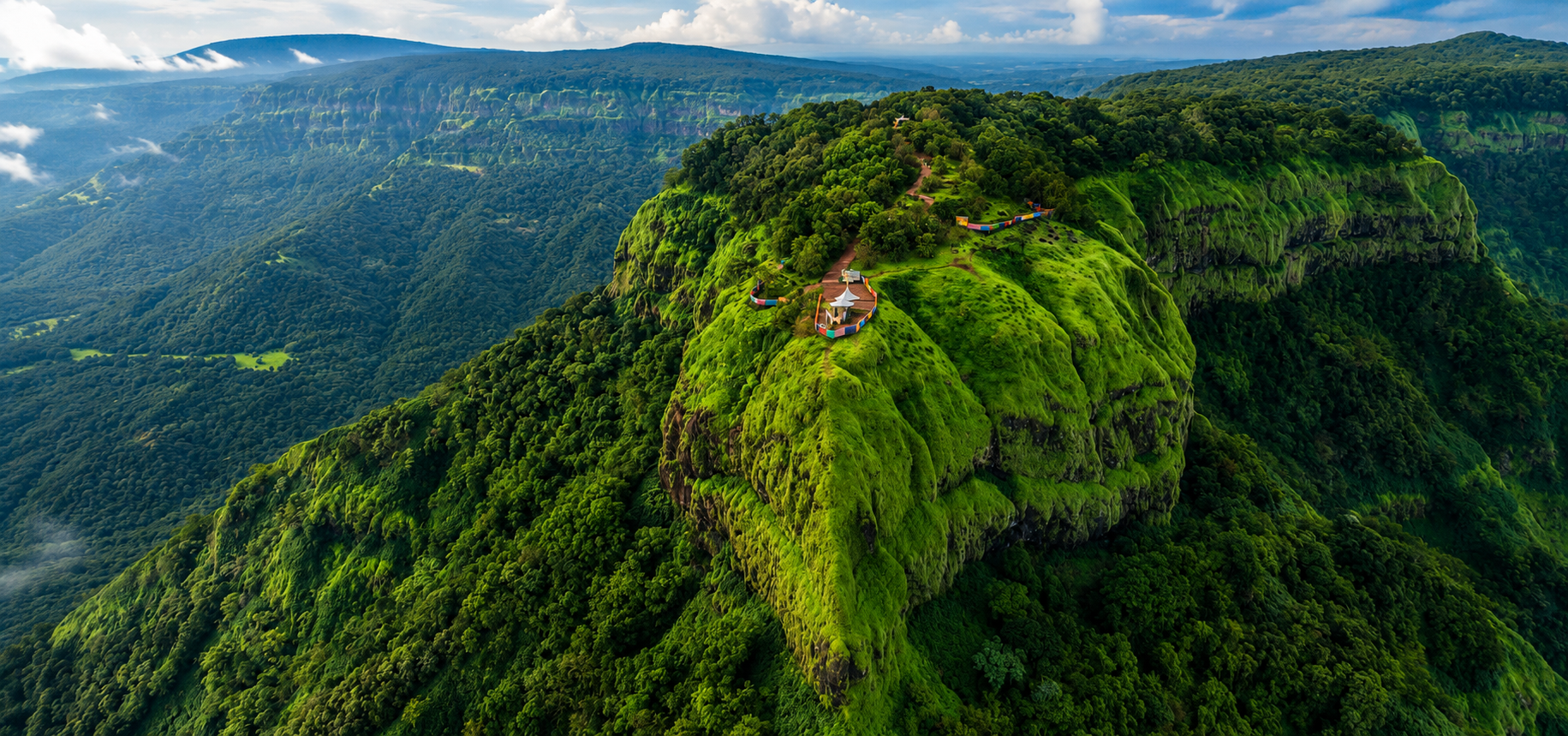
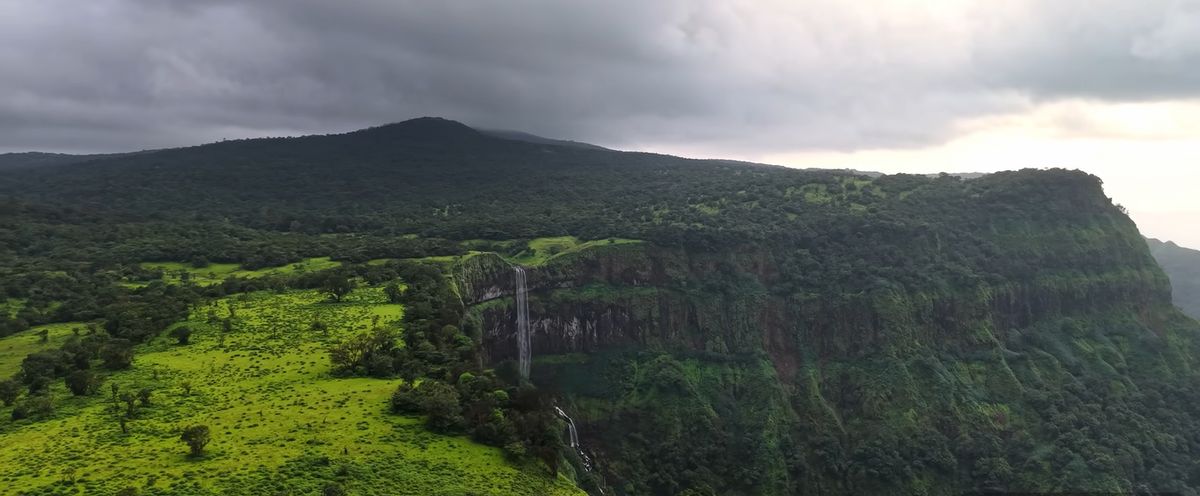
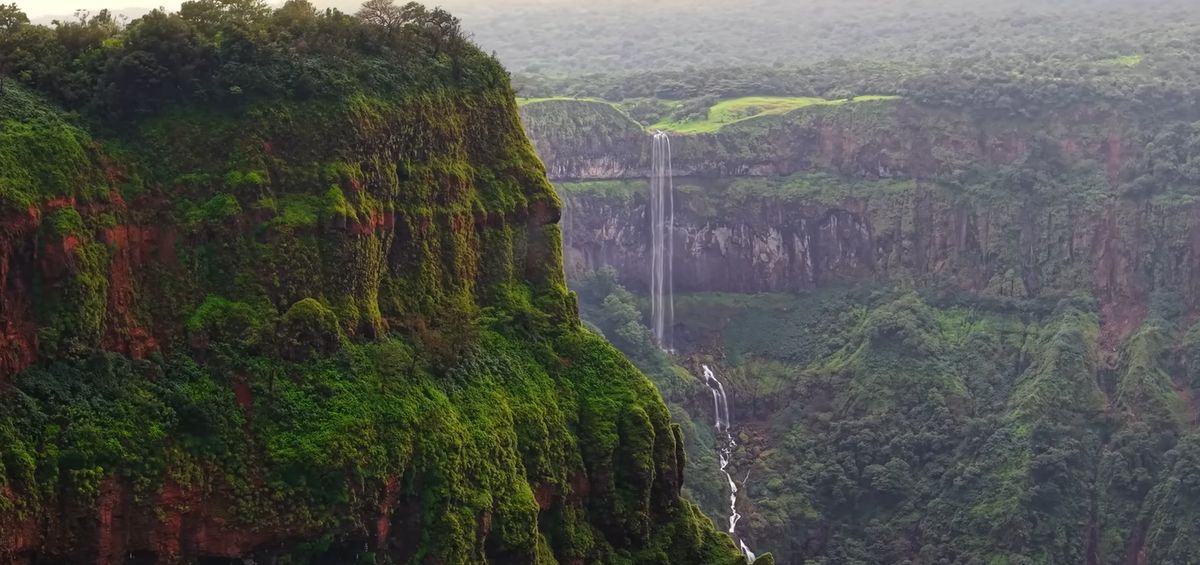
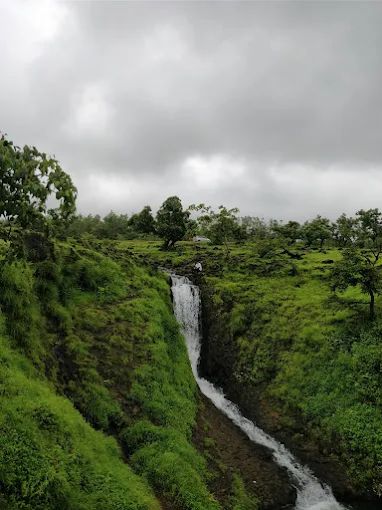
Mahadevgad Waterfall is a stunning seasonal cascade located near the famous Amboli Ghat in the Sindhudurg district of Maharashtra. Tucked away close to the historic Mahadevgad viewpoint, this hidden gem is famous for its incredible beauty during the monsoon season. It is a place where pristine mountain water rushes over dark rocky cliffs and plunges down into a lush green valley below.
Visiting this spot offers a truly refreshing and peaceful escape into nature. Unlike more crowded tourist points, it gives you a chance to experience the raw power of the Western Ghats up close. You can listen to the roaring sound of the water, feel the cool mountain mist on your face, and enjoy breathtaking views of the fog-covered hills. It is the perfect destination for anyone looking for a quiet, scenic adventure in the lap of nature.
History
The origin story of the Mahadevgad Waterfall is deeply intertwined with the royal military history of the Sahyadri mountains and the old princely states of Maharashtra. Long before the seasonal cascade became a favorite stop for monsoon travelers, the towering cliffside from which it plunges served a crucial strategic purpose.
The Lookout of Sawantwadi Sansthan
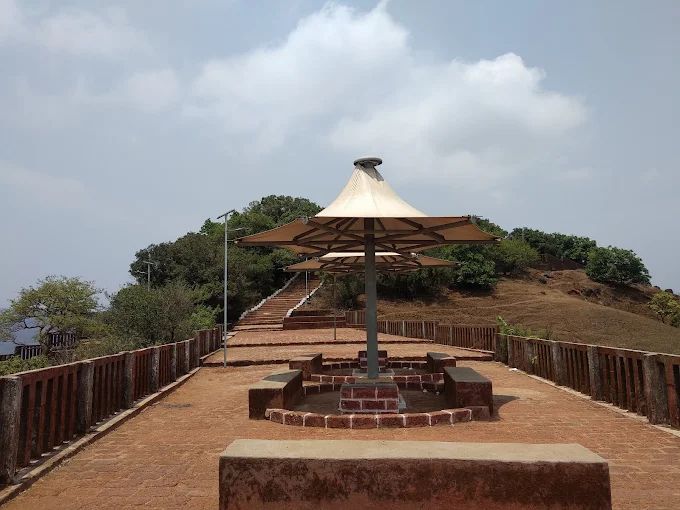
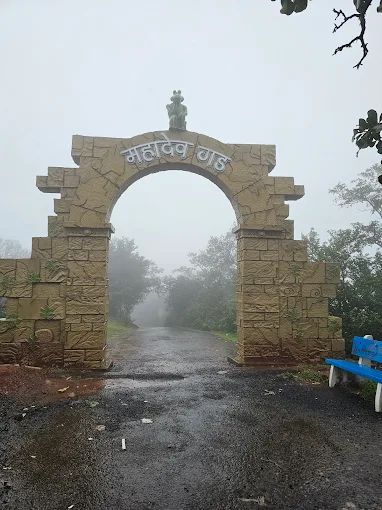
The waterfall drops right below the historic Mahadevgad Fort, an ancient mountain outpost constructed between 1709 and 1738 by Anasahev Fondsawant, the ruler of the Sawantwadi Sansthan (princely state). Perched at an altitude of 2,080 feet, this fort was deliberately built to keep a vigilant eye on the Parpoli Ghat, a vital trade route connecting the markets of the Konkan coast to the upper Deccan plateau.
A Battle-Scarred Ridge
Because of its commanding vantage point, the ridge saw multiple power shifts. It was briefly captured by the Maratha forces of Karveerkar Chhatrapati in 1805 before returning to the Sawants. However, the fort's military journey came to a violent end in August 1829. Following a fierce local rebellion, British officer Colonel Morgan led an assault to capture Mahadevgad, systematically dismantling its stone bastions and gateways to prevent rebels from ever using the cliff as a sanctuary again.
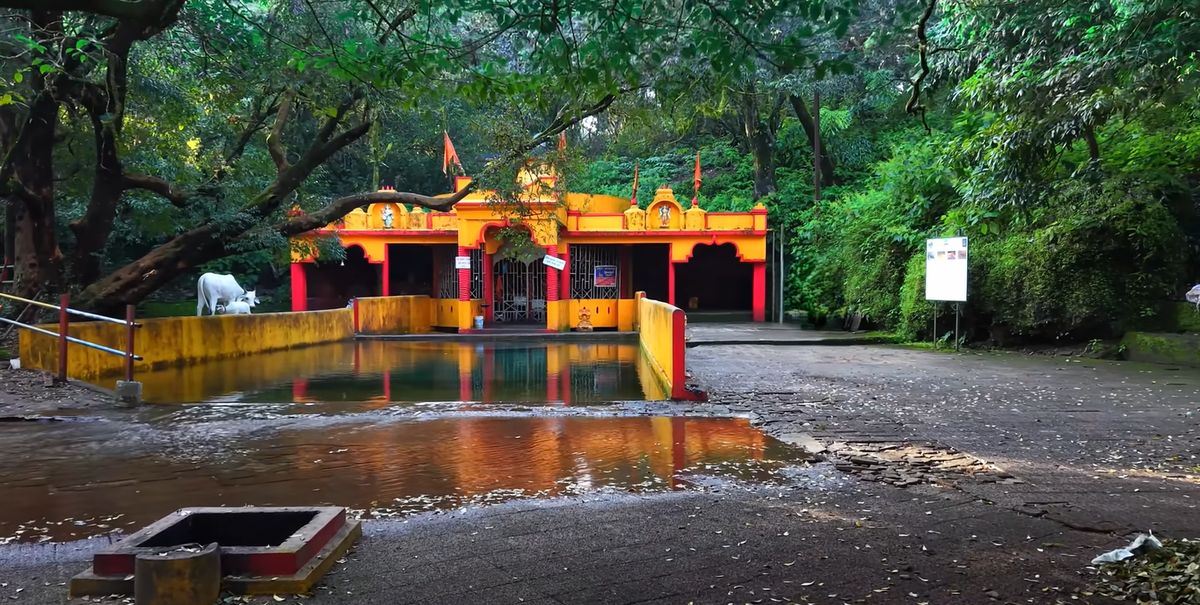
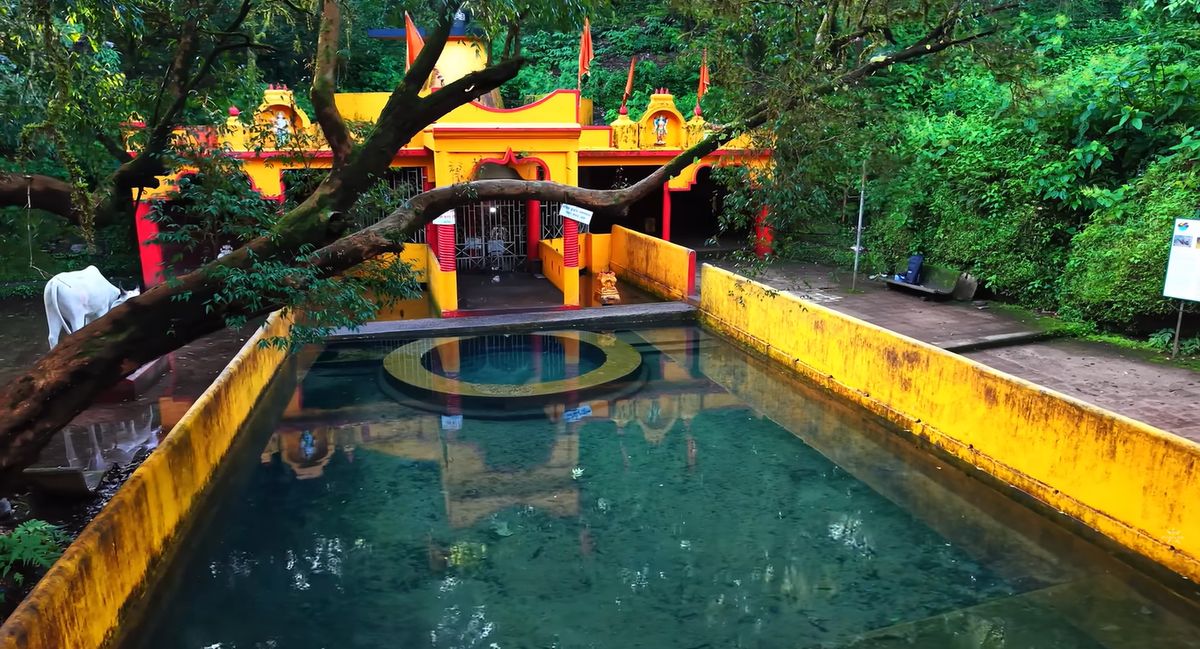
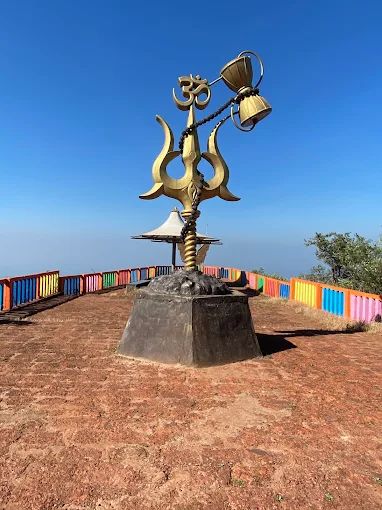
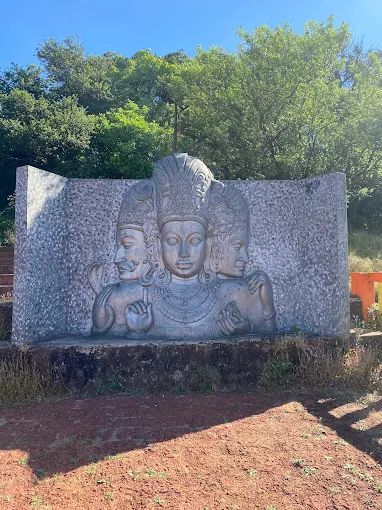
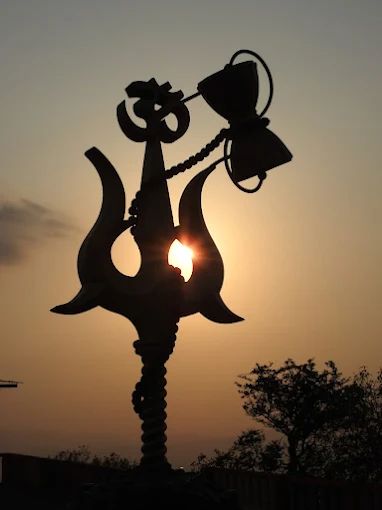
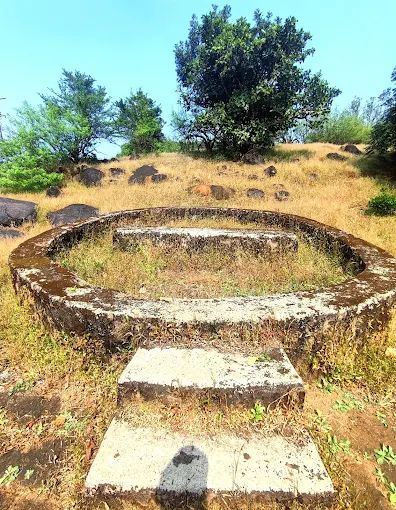
Today, while the old fortifications lie mostly in ruins, an ancient rock-cut cave temple dedicated to Lord Shiva still sits quietly near the hill trunk. When the heavy Amboli rains arrive, the very same cliffs that once echoed with the sounds of cannons now give rise to the peaceful, roaring torrents of the waterfall.
Climate & Weather
Picking the right season to see Mahadevgad Waterfall completely changes your experience. Because Amboli is recognized as one of the wettest regions in Maharashtra, the landscape transitions dramatically from a roaring watery spectacle into a quiet, misty retreat depending on the month you choose.
Summer (March to May)
Summer is the quietest season around the valley, but it is not the ideal season if your main goal is to see a gushing waterfall. During these months, the seasonal stream mostly dries up to a slow trickle or disappears completely. However, because Amboli sits at a high altitude, the weather remains significantly cooler than the scorching plains below, making it a peaceful, crowd-free getaway for forest walks.
Monsoon (June to September)
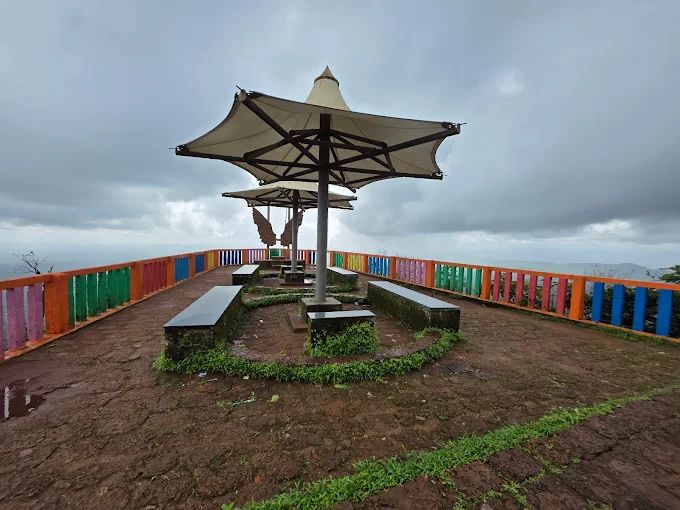
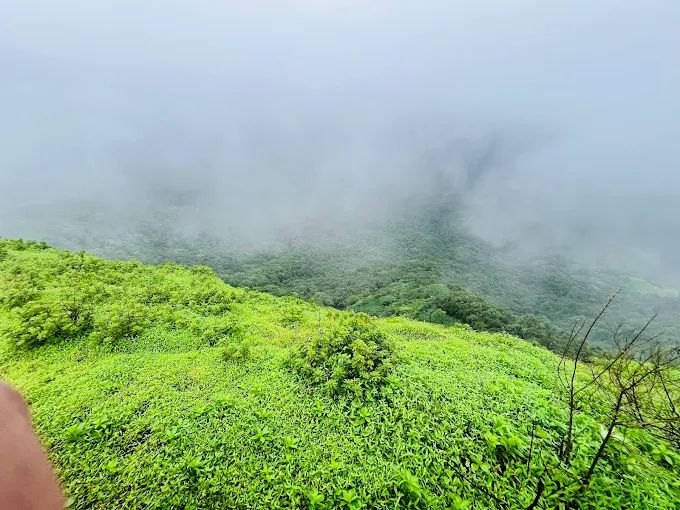
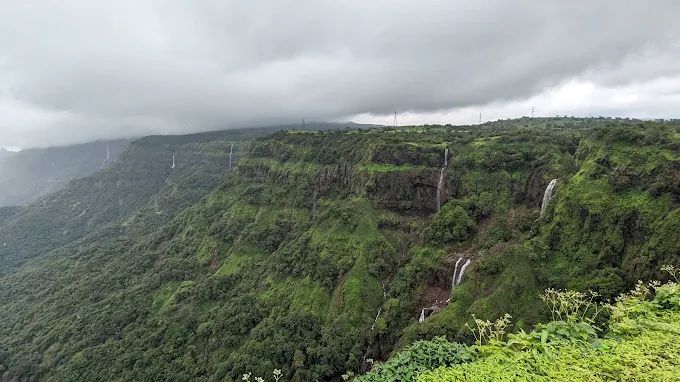
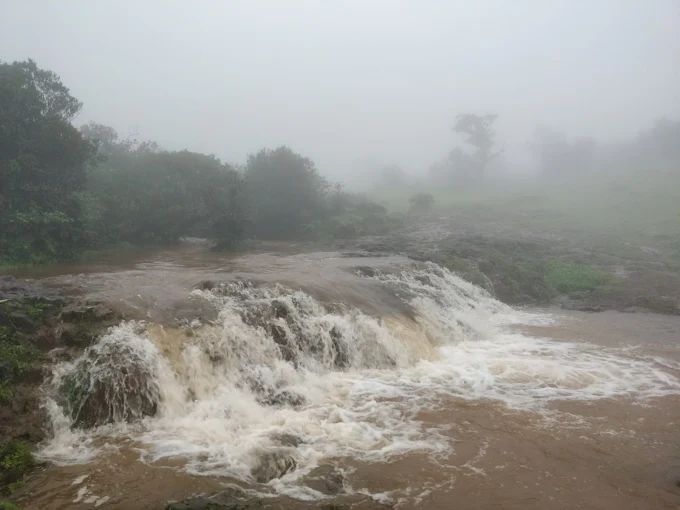
This is the absolute peak tourist season and the ultimate time to experience the waterfall in its full, majestic glory. Fed by relentless downpours, the cascade comes violently alive, plummeting down the dark rock cliffs in a spectacular show of natural power. The entire canyon turns a vibrant emerald green, and heavy clouds drop low enough to swallow the viewing deck.
Safety Warning: July and August bring intense whiteout fog and slick road conditions. Always drive the ghat section slowly during daylight hours.
Winter (October to February)
Winter ushers in the best post-monsoon travel conditions. The torrential rains wrap up, leaving behind a perfectly clear, crisp atmosphere with temperatures hovering between 15°C and 22°C. While the waterfall begins to thin out by January, the surrounding streams still flow gently. This is the prime window for high-visibility sightseeing, deep valley photography, and trekking up to the Mahadevgad fort ruins.
Transportation
Please select a transportation mode to view details
Facilities
Because Mahadevgad Waterfall is fundamentally an untouched, raw natural wonder, it does not feature commercial development or extensive infrastructure at the immediate site. The destination is deliberately kept in its rustic state to preserve its pristine, wild environment.
Food & Dining
You will not find formal restaurants or extensive food courts directly at the waterfall. However, during the peak monsoon season, local villagers set up tiny wooden stalls near the entrance path. These stalls serve simple, comforting local treats like roasting corn on charcoal, piping-hot tea, Maggi, and fresh onion pakoras. For proper sit-down family meals and authentic Malvani cuisine, you can make a quick 5-minute drive back into the main Amboli village center, which boasts several cozy local eateries.
Restrooms & Basic Comforts
Public washrooms and changing rooms are not available directly at the cliffside or near the waterfall pool. Visitors are highly encouraged to use the restroom facilities at their respective hotels or public comfort stations near the central Amboli Bus Stand before heading down the trail.
Parking & Accessibility
A small, cleared clearing near the start of the trail functions as a rudimentary parking zone. While it can easily accommodate two-wheelers and compact cars, navigating and parking large luxury buses can get highly challenging during muddy weekend rushes.
Geographical Information
Mahadevgad Waterfall is tucked away in the southern tip of the Sahyadri Mountain Range, which forms part of the Western Ghats—a designated UNESCO World Heritage site. It is located near the quiet hill station of Amboli within the Sindhudurg district of Maharashtra. This pristine cascade plunges down a cliffside just a stone's throw away from the famous Mahadevgad viewpoint, positioning it right along the border where Maharashtra smoothly transitions into the lush landscapes of Goa and Karnataka.
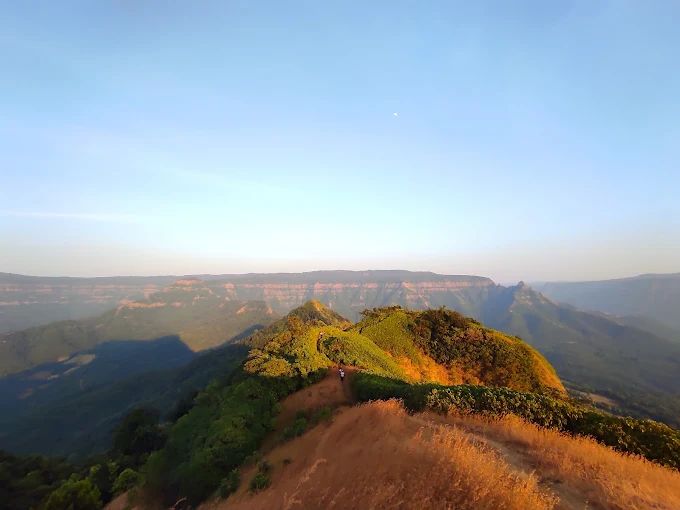
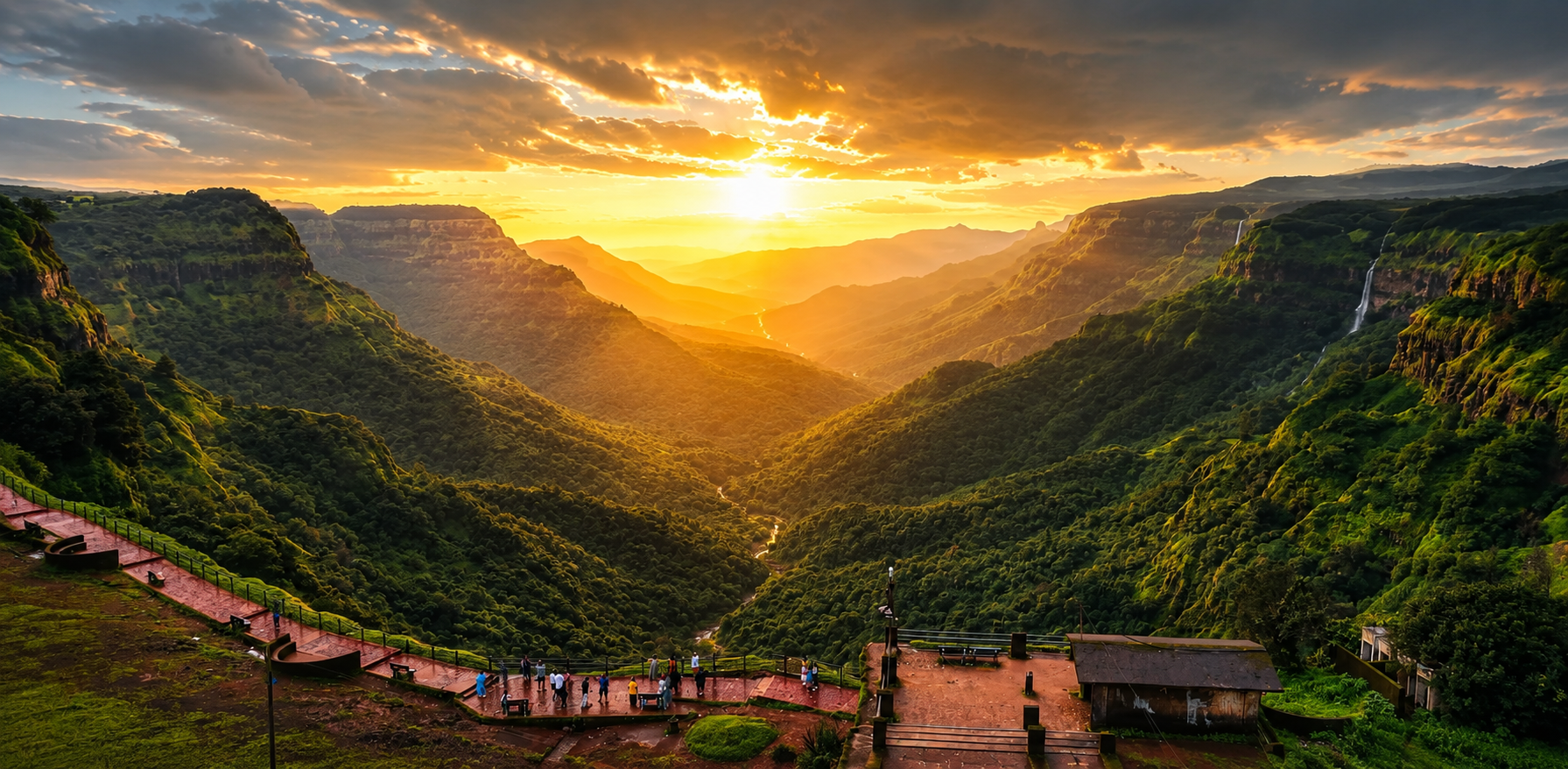
The landscape here is defined by dramatic topography, featuring deep valleys, sheer red laterite cliffs, and a dense forest canopy that remains green throughout the year. Sitting at an altitude of over 2,000 feet above sea level, the waterfall enjoys a tropical montane climate. Because this specific region is one of the heaviest rainfall zones in Maharashtra, the terrain undergoes a complete metamorphosis during the monsoon. Torrential rains feed countless hidden springs, turning the rugged mountain rocks into a roaring network of seasonal streams that flow directly into the coastal plains of the Konkan below.
Culture & Local Lifestyles
The area surrounding Mahadevgad Waterfall is not just a treat for the eyes; it is a living window into the soulful, slow-paced lifestyle of rural Konkan. Deeply connected to the rhythms of nature, the people of this mountain pocket live a life shaped by the heavy rains, deep valleys, and a rich spiritual heritage that has remained unchanged for generations.
Traditions
The local culture is a beautiful blend of deep spiritual faith and immense respect for the wilderness. The villagers here share a profound bond with the forest, viewing the Sahyadri mountains as a sacred protector. Traditional folklore often revolves around Vanadevatas (forest deities) who are believed to guard the pristine mountain streams and waterfalls. Before the start of the farming season, it is a living tradition for families to visit local rustic stone shrines tucked away under giant banyan trees to pray for a prosperous harvest and a safe monsoon.
Festivals
Life in the hills comes alive with vibrant color and community spirit during major cultural celebrations. Given the close proximity to Lord Shiva's historic cave temple near the ridge, Mahashivratri is celebrated with immense devotion, drawing pilgrims from distant coastal villages who trek up the misty paths.
However, it is Ganesh Chaturthi that truly captures the heartbeat of the local lifestyle. Occurring right at the tail end of the monsoon when the waterfall is at its most majestic, this festival sees families coming together to craft eco-friendly clay idols. The air fills with the rhythm of traditional Dhol-Tasha drums, folk singing, and the tempting aroma of freshly steamed sweet ukdiche modak.
Daily Life
Daily life in this mountain terrain is simple, physically demanding, and deeply community-centric. Agriculture is the primary backbone of the economy, with terraced rice farming dominating the step-slopes around the valley. During the drier months, locals tend to their world-famous Alphonso mango trees, cashew plantations, and spice gardens.
Travelers visiting the region will experience a warm, disarming hospitality that is rare in big cities. Whether it is a local farmer offering directions through a foggy trail or a village family sharing a hot cup of ginger tea in a rain-soaked bamboo shack, these genuine cultural experiences leave a far deeper impression than any standard sightseeing spot.
Food and Local Cuisine
Chasing the misty views at Mahadevgad Waterfall is bound to work up a hearty appetite. Luckily, the surrounding Amboli region serves as a fantastic gateway to authentic Malvani and Konkani flavors. The traditional cuisine here is a beautiful reflection of the coastal-mountain landscape, packing bold spices, fresh coconut, and rich, comforting textures that taste best on a rainy day.
Famous Dishes
The star of the local food scene is undoubtedly the authentic Malvani Thali. For non-vegetarians, this features ultra-fresh seafood or tender chicken cooked in a rich, velvety gravy made from roasted coconuts and a unique, fiery local spice blend called Malvani Masala. It is traditionally paired with Kombdi Vade—fluffy, deep-fried pooris crafted from a multi-grain flour blend.
Vegetarians are in for an equally incredible treat with Kaju Usal, a rich, creamy curry made from freshly harvested, tender green cashew nuts. Every single meal is rounded off with a chilled glass of Solkadhi, a soothing, pink digestif made from kokum fruit extract, fresh coconut milk, and a hint of green chili.
Street Food
If you are looking for a quick bite right near the waterfall trail, the local street food is delightfully simple and satisfying. During the monsoon, tiny wooden shacks pop up along the roadside serving comforting classics. You can grab a cob of hot charcoal-roasted corn rubbed with lime and chili, crispy onion pakoras fried right in front of you, or a steaming bowl of spicy masala Maggi. There is nothing quite like holding a hot cutting chai while watching the mountain fog roll over the valley.
Restaurants & Cafes
While there are no fancy cafes or fine-dining restaurants directly at the cliffside, a short 5-to-10-minute drive into central Amboli village brings you to some of the best food in the area. Cozy, family-run eateries like Hotel Shivmalhar and Hotel Sainik are highly popular among road-trippers for their legendary, home-style Malvani thalis. For a more structured dining setup, the in-house restaurant at the MTDC Green Valley Resort offers a reliable menu featuring a clean mix of local Konkani, North Indian, and classic comfort foods.
Accommodation
Finding the best accommodation near Mahadevgad Waterfall is relatively simple, as long as you base your stay in the central village of Amboli, located just 5 to 10 minutes away from the cliffside trail. While you won’t find commercial mega-resorts touching the edge of the waterfall itself, the surrounding valley offers a wonderful variety of lodging options tailored to different budgets and travel styles.
Budget Hotels
For backpackers and road-trippers looking for a basic, affordable base, Amboli village features several no-frills budget stay options. Properties like Hotel Durvankur and various local lodges offer clean, minimalist rooms with essential amenities like hot running water—which is an absolute necessity in the chilly mountain weather. These budget properties place you right near the main highway, making it incredibly convenient to hop from one sightseeing trail to another.
Mid-Range Hotels & Retreats
The mid-range category provides the most balanced experience for families and couples, offering a blend of comfort, space, and beautiful natural settings. Highly rated options like the Amboli Hill Resort and The Bison Resort feature spacious layouts, in-house Malvani restaurants, and balconies looking out into the foggy woods. Another popular choice in this segment is the government-run MTDC Green Valley Resort, widely chosen for its vast, tree-lined campus and reliable hospitality.
Luxury Resorts & Eco-Retreats
While standard five-star commercial luxury is absent in this protected eco-sensitive zone, the region offers upscale, nature-focused luxury resorts that lean into experiential travel. Properties like the Dark Forest Retreat offer beautiful premium rooms and independent cottages nestled deep within private forested patches. These stays focus on quiet seclusion, offering curated nature walks, bird-watching sessions, and premium views of the rain-soaked Sahyadri canopy.
Homestays
If you want to experience authentic Konkani warmth up close, booking one of the local homestays is a fantastic decision. Run by village families, these rustic setups let you rent out cozy rooms or independent countryside villas. Staying at a homestay gives you access to invaluable insider tips on secret trails, a peaceful backyard garden environment, and the unmissable opportunity to wake up to a home-cooked, authentic Maharashtrian breakfast.
Budget/Cost Estimation
Planning your trip budget for Mahadevgad Waterfall is highly satisfying because this hidden gem is an incredibly affordable travel destination. Since the waterfall itself is an open natural wonder with zero commercial entry fees, your estimated expenses will mostly depend on your choices for transport, local food, and accommodation.
Here is a practical, point-by-point breakdown of what you can expect to spend per day:
- Accommodation Costs
- Budget Travel: ₹800 – ₹1,500 per night for simple homestays and basic roadside lodges in Amboli.
- Mid-Range Travel: ₹2,000 – ₹3,500 per night for standard family hotels and cozy hillside resorts.
- Luxury/Experiential: ₹4,500 – ₹8,000 per night for premium forest retreats and independent nature cottages.
- Food & Dining Expenses
- Budget Travel: ₹250 – ₹400 per day by eating at local street food stalls (cutting chai, pakoras, and simple dhabas).
- Mid-Range Travel: ₹500 – ₹900 per day for authentic sit-down Malvani thalis at popular village eateries.
- Luxury/Experiential: ₹1,200 – ₹2,000 per day for multi-cuisine dining directly inside premium resort properties.
- Transport & Connectivity
- Budget Travel: ₹150 – ₹300 per day by utilizing state-run MSRTC buses and shared local jeeps.
- Mid-Range Travel: ₹800 – ₹1,500 per day for personal car fuel or renting a local two-wheeler.
- Luxury/Experiential: ₹2,500 – ₹4,000 per day for hiring a private, dedicated outstation AC cab from Goa or Belagavi.
- Sightseeing & Activities
- Waterfall Access: ₹0 (Completely free entry for everyone, with no camera or parking fees at the main trail).
- Optional Extras: ₹200 – ₹800 for tipping local trail guides or taking a private tour of nearby spice plantations.
Frequently Asked Questions
Popular Activities
Video and Photo Gallery
Related Stories
Traveller Reviews
No reviews yet
Be the first to share your experience!