Introduction
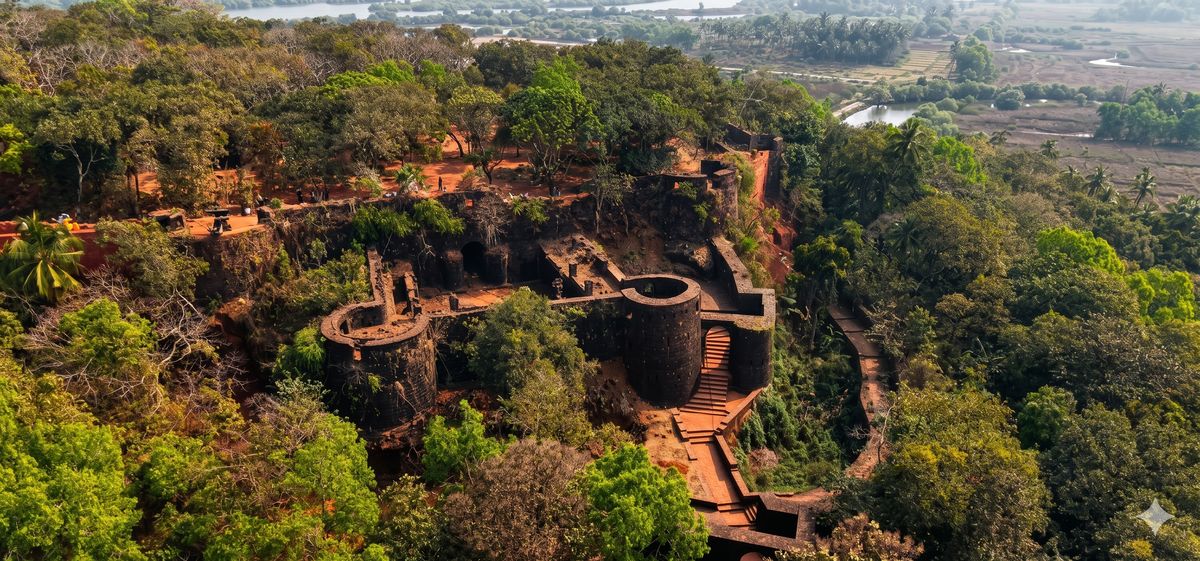
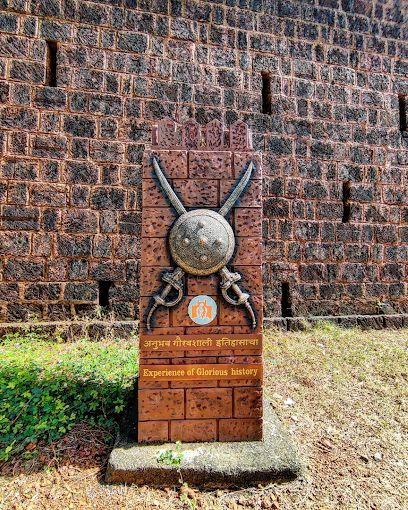
Hidden away in the quiet coastal village of Redi in the Sindhudurg district of Maharashtra, Yashwantgad Fort—widely known as Redi Fort—is a spectacular maritime ruin. Right near the Maharashtra-Goa border and just a short drive from Vengurla, this ancient coastal fortification is famous for its unique "jungle-book" aesthetic. Originally built to secure maritime trade and watch over the Terekhol creek, it later became a vital shield in the Maratha Empire’s naval defense network under Queen Tarabai.
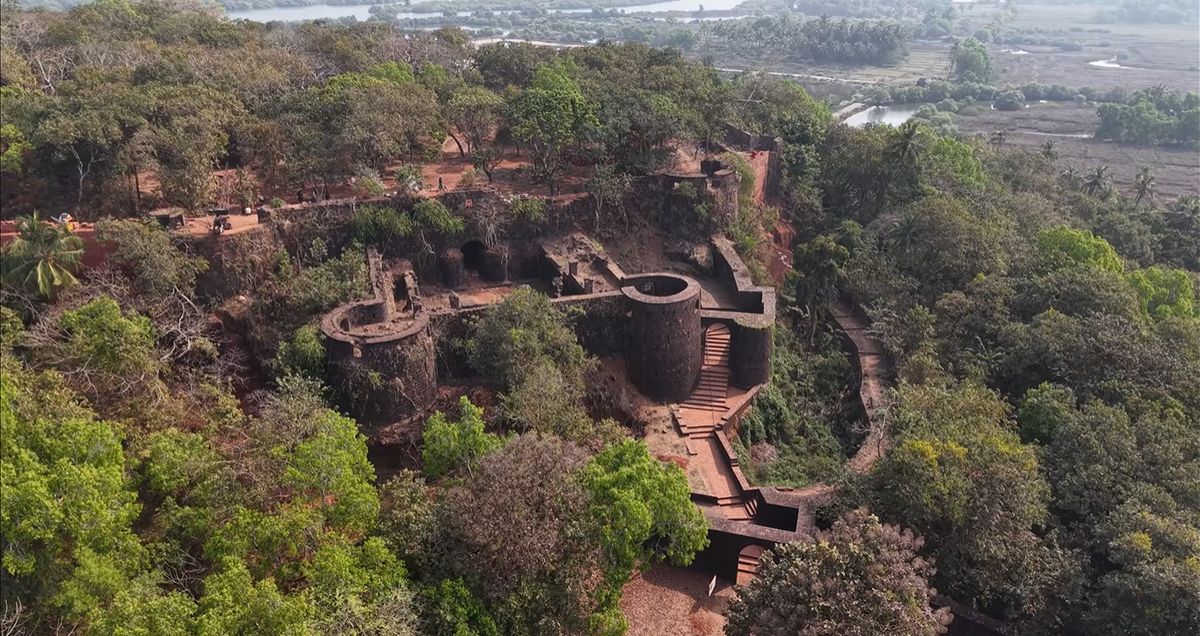
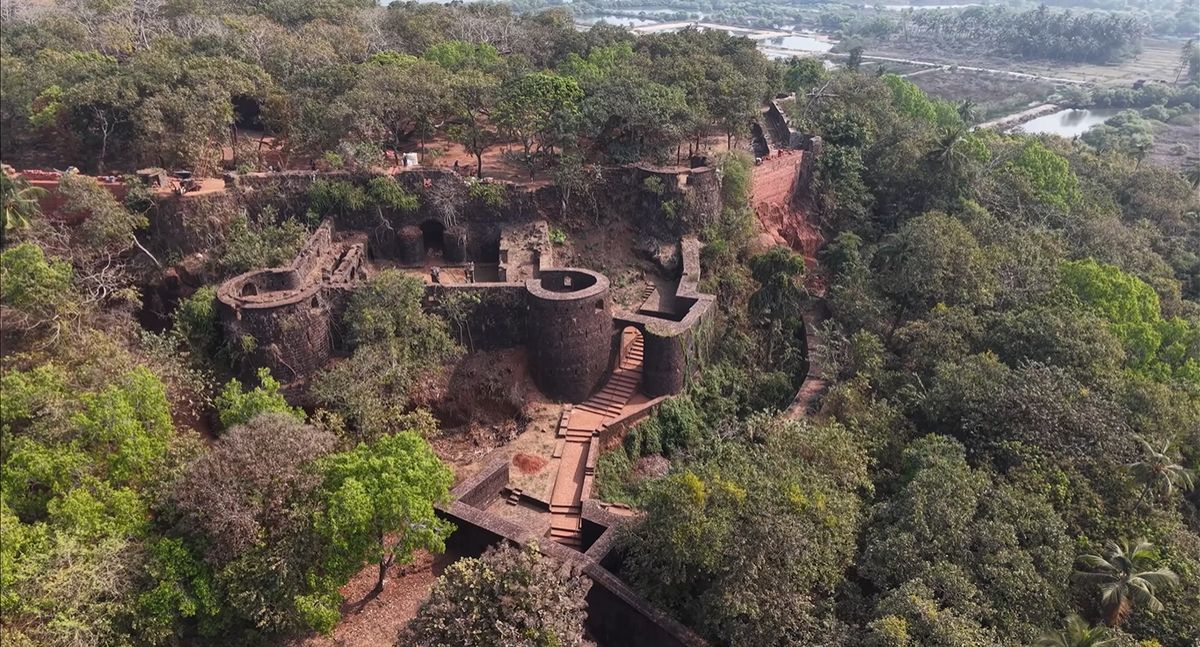
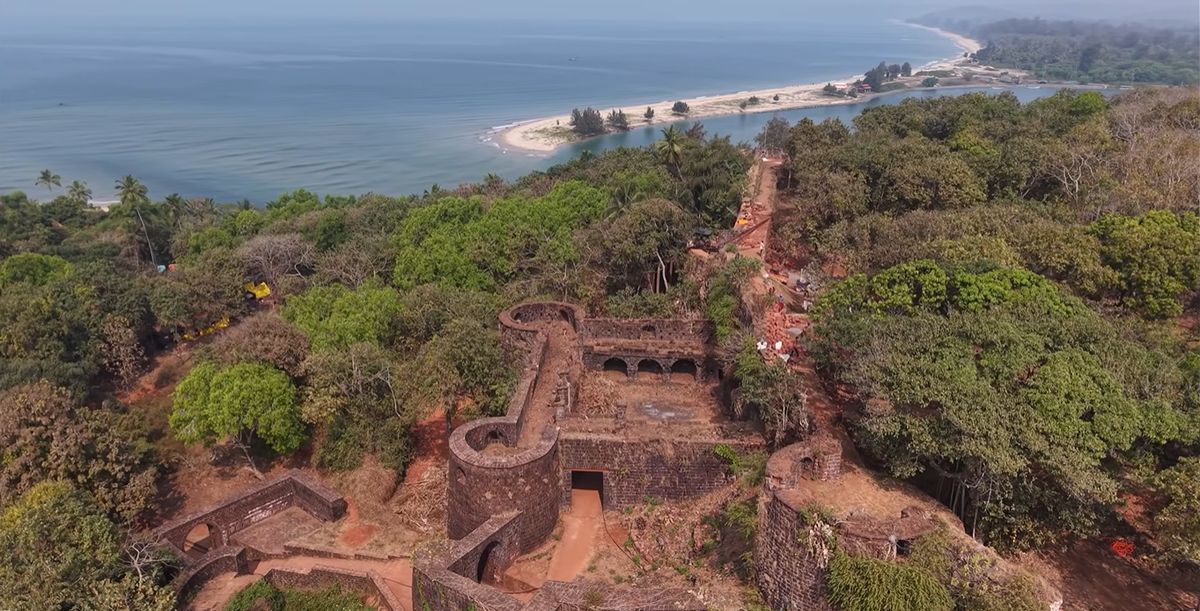
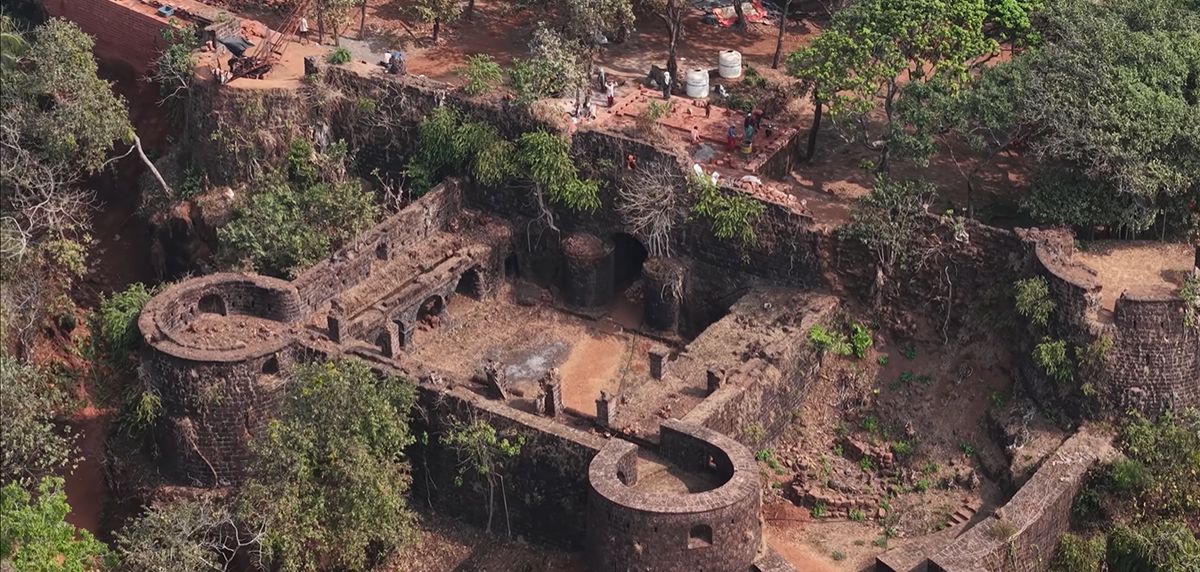
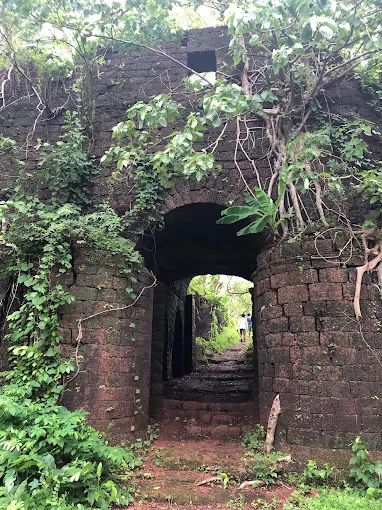
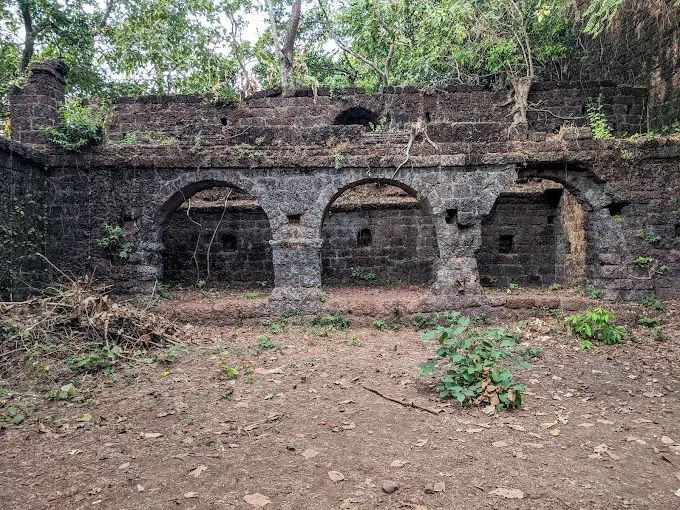
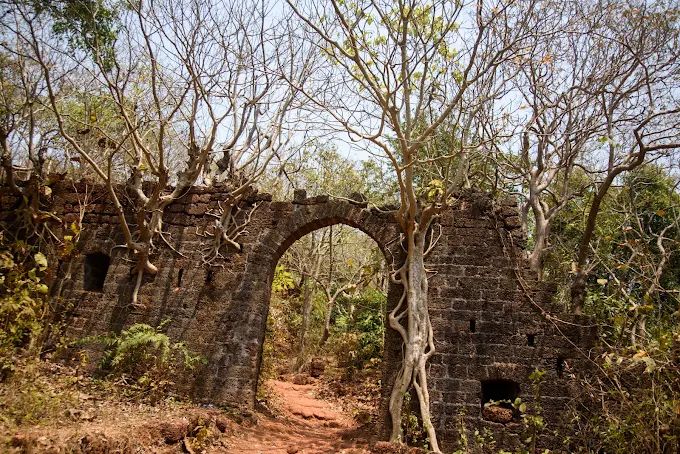
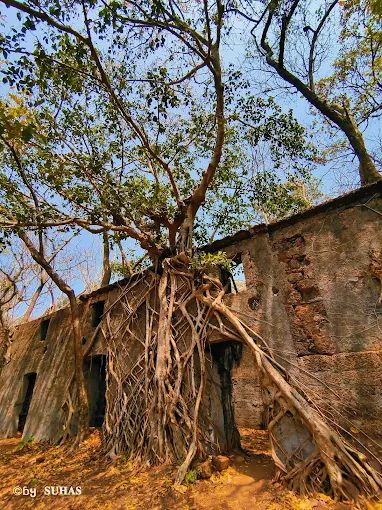
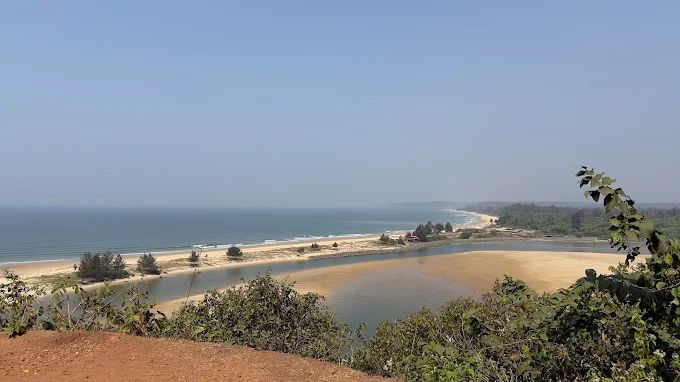
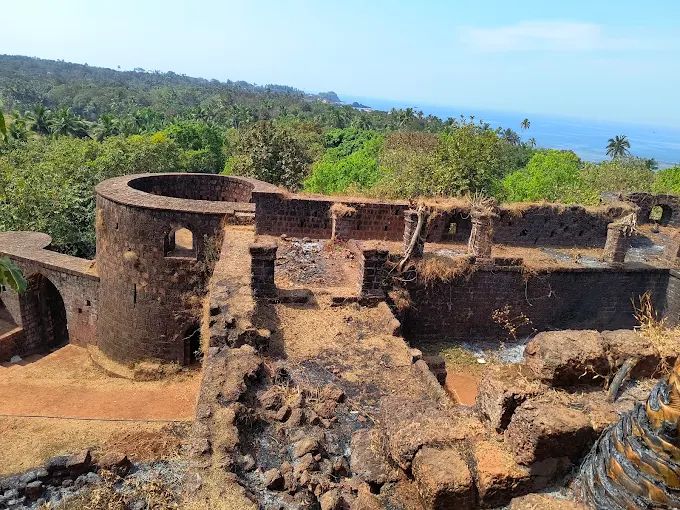
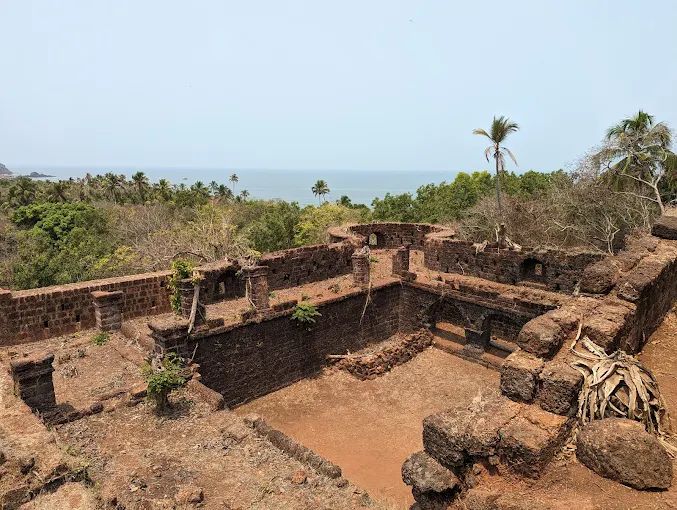
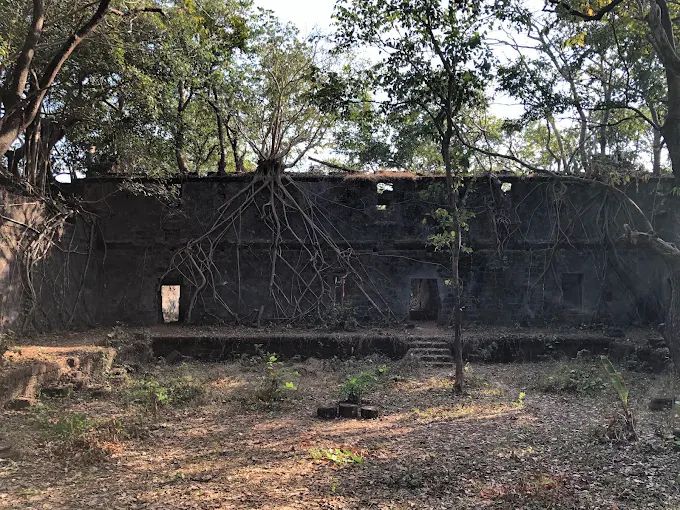
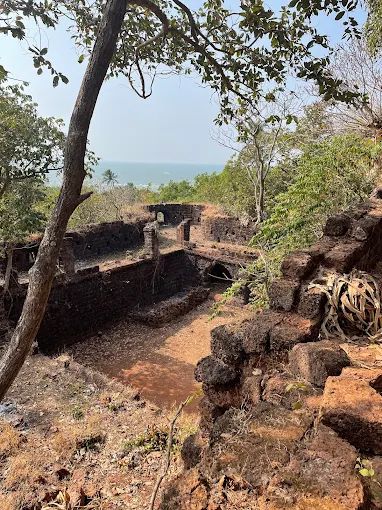
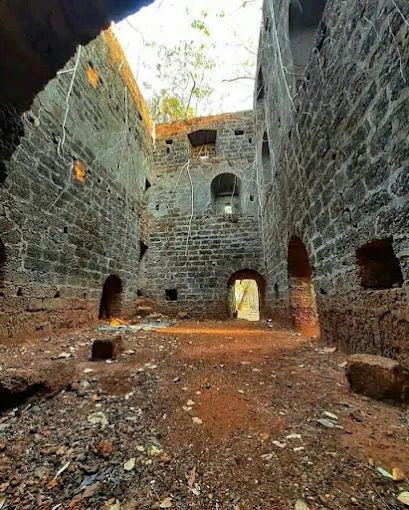
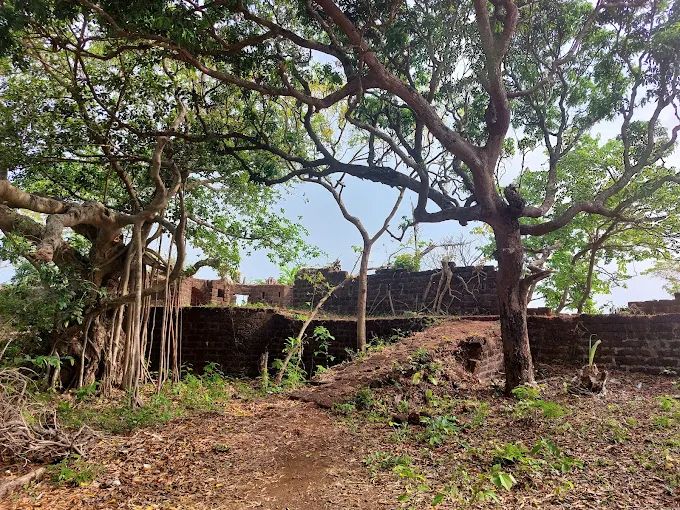
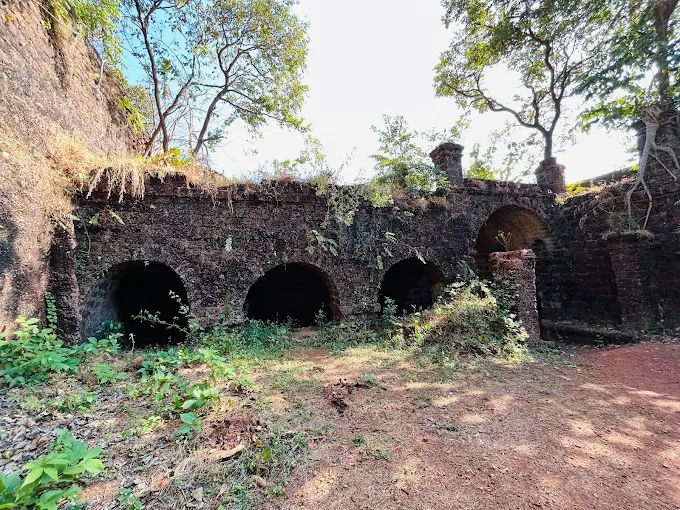
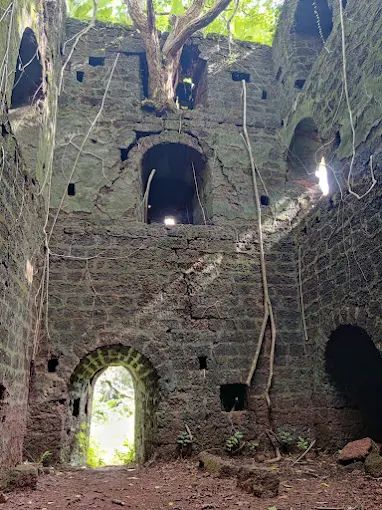
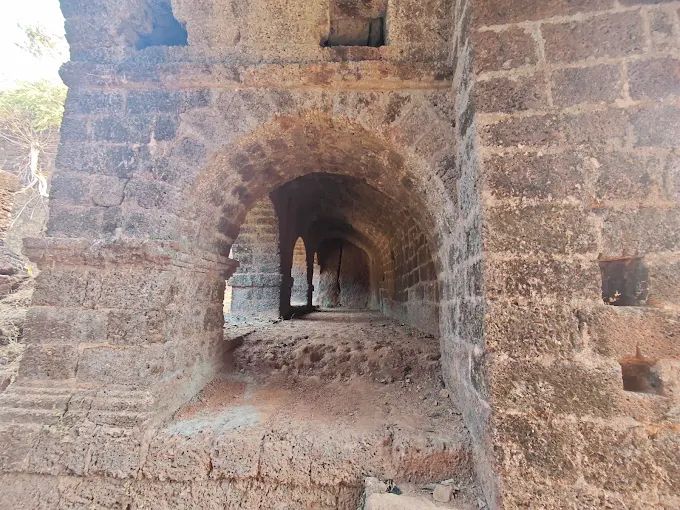
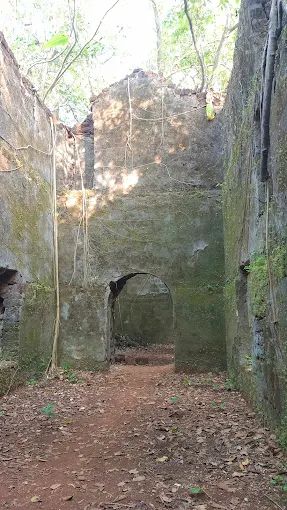
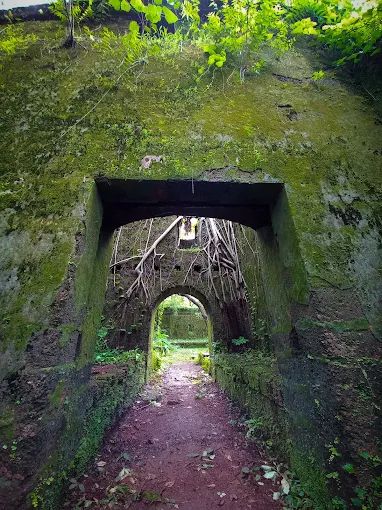
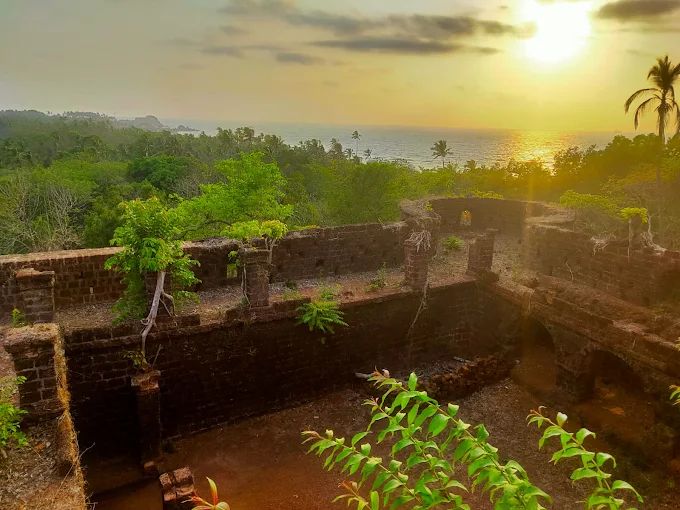
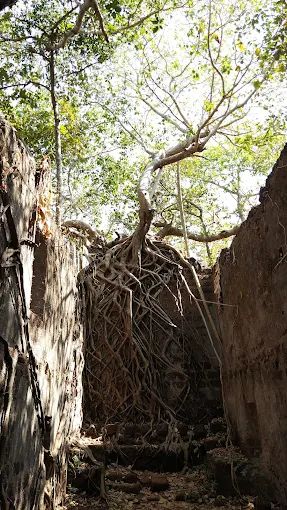
Visiting Yashwantgad Fort offers a deeply atmospheric, moody adventure where history and nature completely collide. The highlight of the experience is wandering through massive, roofless stone chambers and multi-layered gateways where giant banyan tree roots drape over ancient laterite walls like natural curtains. It is a dream destination for offbeat travelers looking to escape the crowds, climb quiet ramparts for panoramic views of the Arabian Sea, and walk straight from the ruins onto the pristine, untouched sands of Paradise Beach
History
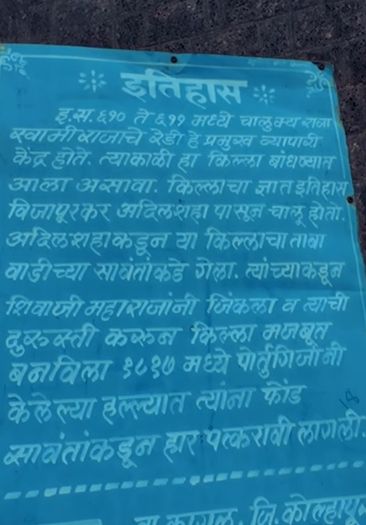
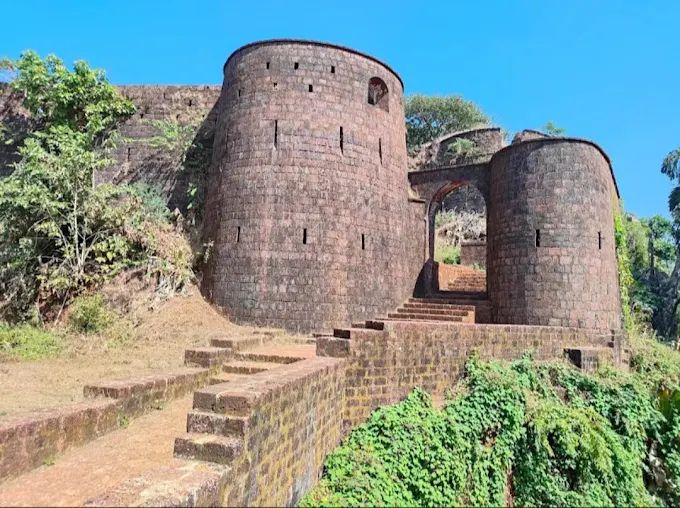
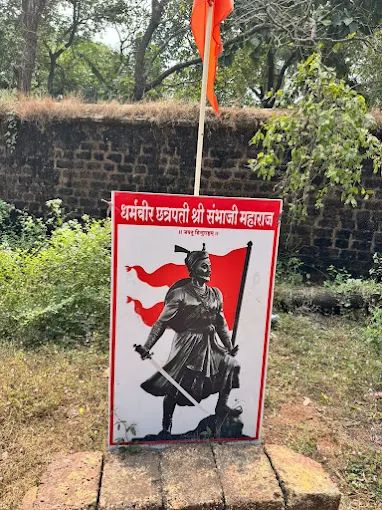
The origin story of Yashwantgad Fort is layered with dramatic shifts in power that shaped the destiny of the Konkan coast. Strategically built by the Adil Shahi Sultanate of Bijapur in the sixteenth century, the fort was initially designed to guard the busy shipping lanes of the Terekhol creek. Recognizing its immense maritime value, the Maratha warrior king Shivaji Maharaj later captured the fortress, reinforcing its thick laterite walls to expand his growing naval empire.
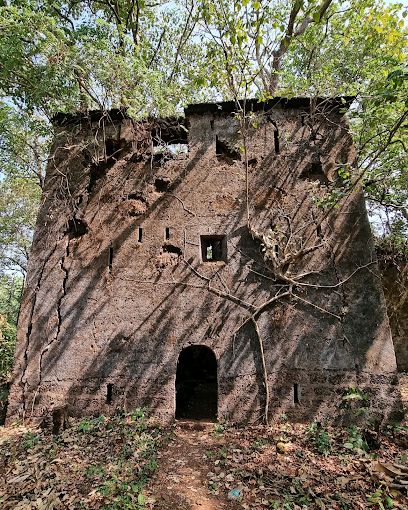
The fort reached its peak of political significance under Queen Tarabai of the Kolhapur Maratha kingdom, who named it "Yashwantgad"—meaning the "Fort of Victory." For decades, its heavy battlements stood as an impenetrable shield against foreign invaders, successfully keeping Portuguese armadas and local rivals at bay. The stone corridors once buzzed with the strategic whispers of Maratha naval commanders who monitored the open waters from elevated watchtowers.
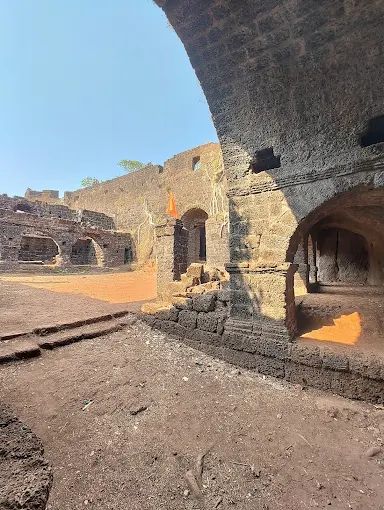
The tide turned in the late eighteenth century when a joint force of Portuguese and British troops launched fierce attacks on the stronghold. By 1819, the British East India Company took permanent control, disarming the fort and leaving its structures to the elements. Over the centuries, the active military garrison dissolved into memory, clearing the path for the surrounding jungle to swallow the ruins. Today, the majestic banyan roots wrapping tightly around the stone walls serve as a beautiful, living monument to India's chaotic seafaring past.
Climate & Weather
Timing your trip to Yashwantgad Fort is the secret to unlocking its magical, forgotten-world charm. Because this coastal ruin is largely engulfed by thick jungle greenery, the shifting seasons dramatically change how you explore its winding pathways and ancient stone chambers.
☀️ Summer (March to May)
Summers along the Redi coast can get incredibly hot and intensely humid. Walking through the unshaded, roofless ruins during the afternoon can feel quite draining. However, the early mornings and late evenings offer a peaceful experience. It is a quiet time to visit if you want to club your fort walk with a sunset dip at the nearby, uncrowded beaches.
🌧️ Monsoon (June to September)
The rainy season turns the weather in Redi into a wild, cinematic spectacle. Heavy downpours bring the jungle alive, making the giant banyan tree roots slick, vibrant, and incredibly green. For travelers who love moody photography and raw nature, monsoon travel here is deeply rewarding. Just remember to pack solid trekking shoes, as the ancient laterite steps become very slippery.
❄️ Winter (October to February)
Winter is easily the best time to visit Yashwantgad Fort. This peak tourist season brings delightfully cool breezes, clear blue skies, and very comfortable walking conditions. It is the ideal season to take your time exploring every hidden courtyard, climbing the ramparts, and taking long photographs without breaking a sweat.
Transportation
Please select a transportation mode to view details
Facilities
When packing your bags for Yashwantgad Fort, it helps to keep a "wilderness explorer" mindset. Because this fort is famous for its raw, untouched, and overgrown "Jungle Book" vibe, it does not function like a heavily commercialized urban monument. Instead, it offers an authentic adventure with very minimal tourist infrastructure inside the ruins.
Here is what you need to know about the on-ground setup:
- Restrooms & Hygiene: There are no public restrooms or drinking water stations built inside the fort walls. To find clean facilities, you can walk or drive down to the small restaurants, local shops, and beach shacks near Redi Beach and the famous Redi Ganpati Temple just a few minutes away.
- Food & Refreshments: You will not find modern cafes or food stalls inside the ancient stone courtyards. However, the approach road near the fort entrance features small local stalls selling chilled buttermilk, fresh coconut water, bottled water, and local snacks. For a full traditional fish thali, head out into Redi village.
- Guides & Navigation: Yashwantgad does not have an official government ticket counter, information desk, or authorized tour guides. Exploring is entirely free and self-guided. It is smart to download an offline map before entering, as the dense tree canopy can occasionally weaken mobile networks.
- Parking & Security: There is a small, unpaved open ground near the main entrance gate where visitors can park their cars and bikes for free. The area is peaceful and perfectly safe during the day, but since there is absolutely no artificial lighting inside the overgrown chambers, you should plan to wrap up your exploration well before sunset.
Geographical Information
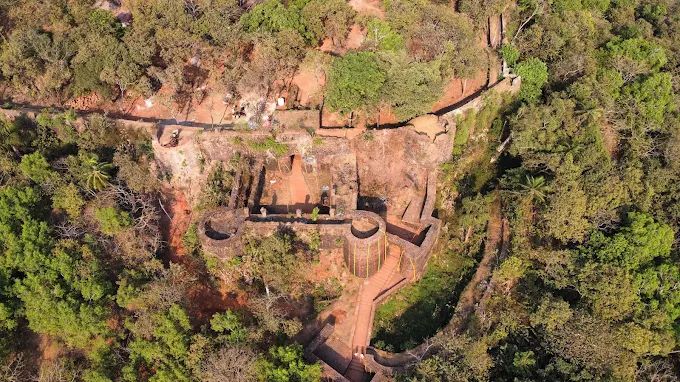
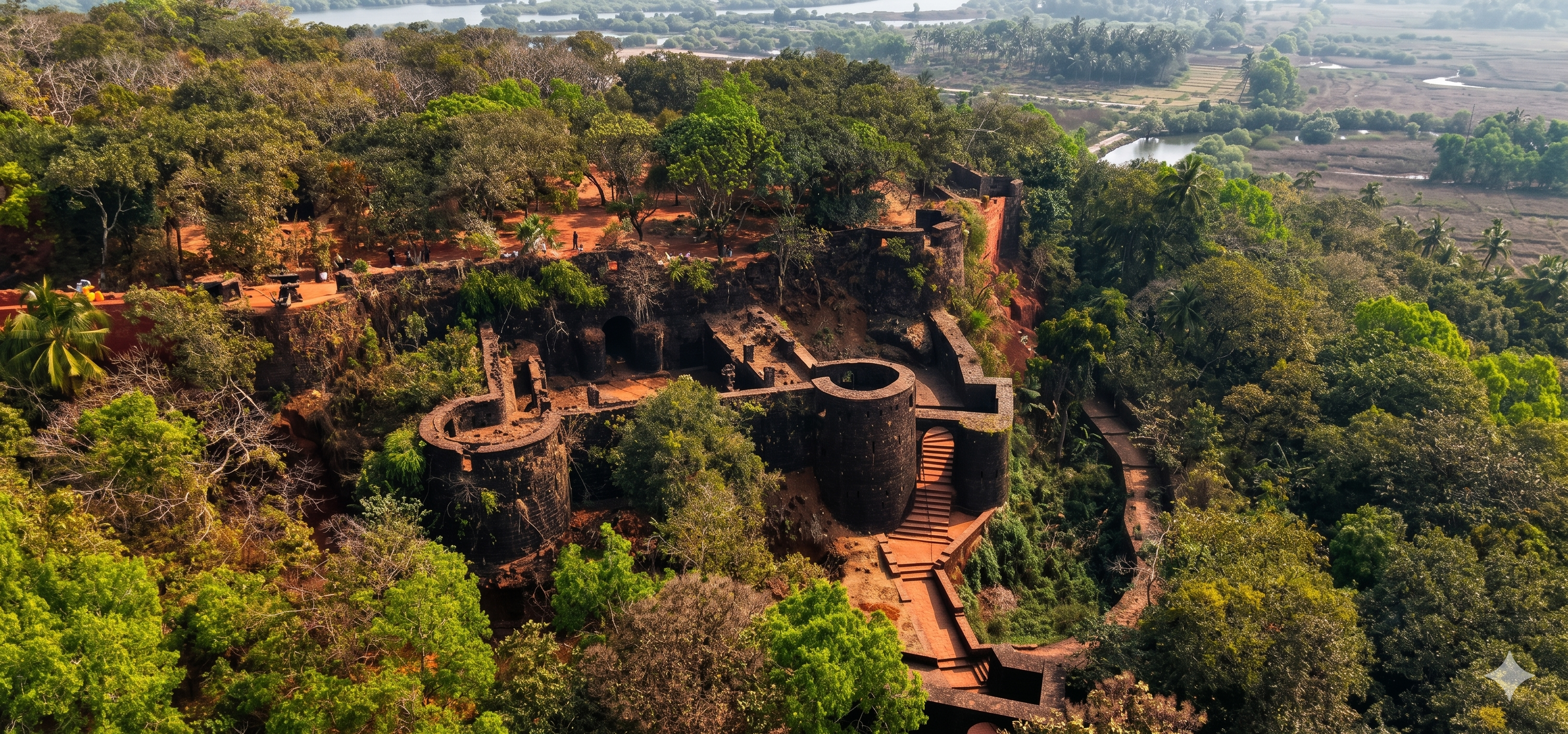
Yashwantgad Fort is beautifully situated atop a small, coastal hillock in the historic village of Redi. Located in the Vengurla taluka, at the southernmost tip of Maharashtra's Sindhudurg district, this sea-facing stronghold sits right near the Goa border. The fort enjoys a highly tactical position overlooking the confluence of the calm Redi creek and the vast Arabian Sea, making it a crucial maritime landmark along the Malabar Coast.
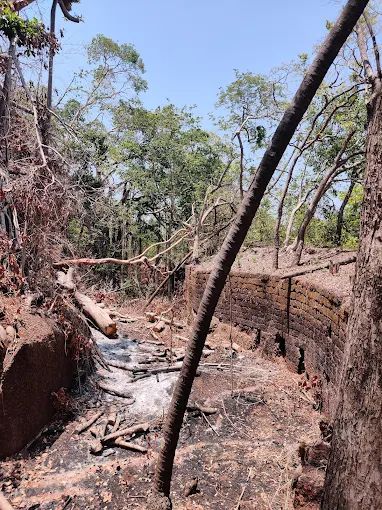
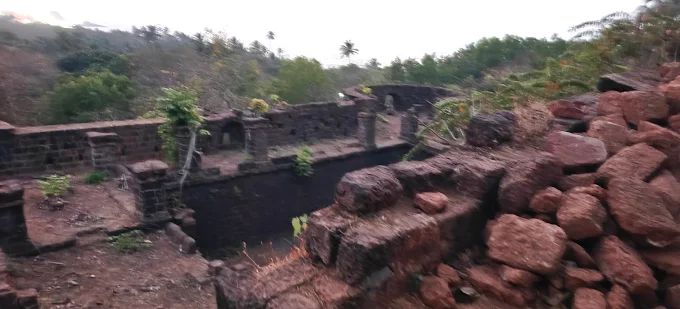
The physical terrain of the fort is defined by a dense, jungle-covered landscape set on an elevated laterite plateau rising about 150 feet high. This rugged terrain is naturally guarded by a deep, 20-foot-wide dry moat carved directly out of solid rock. The local climate is typically tropical and coastal, offering warm, highly humid weather balanced by pleasant evening sea breezes. Over the centuries, nature has completely reclaimed the dark basalt and laterite stone architecture, creating a stunning visual characteristic where massive tree roots wrap tightly around the ruins, immediately overlooking the pristine sands of Paradise Beach.
Culture & Local Lifestyles
To truly connect with Yashwantgad Fort, you have to look beyond its crumbling stones and get to know the quiet, coastal rhythm of Redi village. Tucked away on the edge of the Maharashtra-Goa border, this community boasts a rich local culture deeply rooted in ancient spirituality, simple seafaring life, and absolute warmth toward travelers.
⚓ Traditions
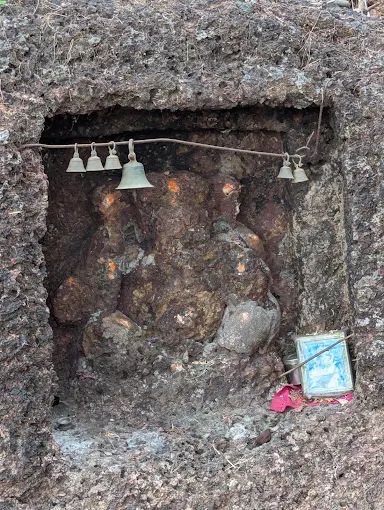
The local traditions here are a beautiful mix of deep faith and respect for nature. Redi village is famously home to Goddess Mauli, considered the spiritual queen of the region, and the legendary Redi Ganpati Temple. A fascinating local tradition centers around the massive, two-armed Lord Ganesha idol, which a local truck driver miraculously unearthed from the village iron ore mines in 1976 after seeing it in a dream. This mix of living history and mystical folklore shapes the community's identity, making a walk through the village feel like stepping into a storybook.
🌊 Festivals
The entire landscape bursts into celebration during major festivals. While Ganesh Chaturthi brings massive, joyful family gatherings, the spring festival of Shimga (the Konkani Holi) is when you can experience the most authentic cultural extravaganza. For nearly a week, the village streets come alive with colorful folk dances, community feasts, and nighttime Dashavatara plays—vibrant theatrical performances where locals don hand-painted masks to enact ancient mythological legends. Participating in these public gatherings offers unforgettable cultural experiences.
🥥 Daily Life
The local lifestyle in Redi moves at a beautifully relaxed, sushegad (easygoing) pace. The mornings start quietly with the rustle of giant coconut palms and cashew trees, as fisherfolk head toward the creek and farmers tend to their orchards. The local dialect is Malvani, a soft and musical variation of Marathi that matches the friendly, laid-back nature of the residents. People are incredibly proud of their heritage and are always happy to share home-cooked coastal meals or point you toward hidden pathways inside the fort, offering travelers an authentic glimpse of slow village life.
Food and Local Cuisine
Exploring Yashwantgad Fort is bound to work up a hearty appetite, and fortunately, the surrounding Redi and Vengurla region is a paradise for seafood lovers and spice enthusiasts. The local food here belongs to the legendary Malvani style, celebrated for its generous use of freshly scraped coconut, fiery local chilies, and a signature sour tang from kokum fruit.
🐟 Famous Dishes
The ultimate highlight of this traditional cuisine is the classic Malvani fish thali. You cannot leave without trying the crispy, rava-fried Surmai (Kingfish) or Prawns Fry, served alongside a steaming bowl of Fish Kalvan—a deeply aromatic coconut fish curry. Every authentic meal is accompanied by Solkadhi, a soothing, pink digestif drink made from fresh coconut milk and tangy kokum that cools the palate instantly. For vegetarians, Kaju Usal (a creamy curry made with fresh, locally harvested cashews) paired with soft rice Bhakri is an absolute must-try.
🥥 Street Food
As you head down toward Redi Beach or the local temple markets in the evening, you will find excellent street food options. Grab a plate of piping hot Kanda Bhajji (onion fritters) or Mirchi Vada from beachside shacks. For a unique sweet treat, look out for Khatkhate or Ghavan—a lacy, melt-in-your-mouth rice crepe served with fresh liquid jaggery and grated coconut that makes for a perfect afternoon snack.
🍛 Restaurants & Cafes
While there are no commercial eateries inside the overgrown fort ruins, you will find the best food in Redi at simple, family-run dining halls known as Khanavals. These spots serve home-cooked, authentic seafood meals on banana leaves. For a wider selection of beachfront cafes and multi-cuisine restaurants, a short 15-minute drive to Shiroda Beach or Vengurla town opens up excellent coastal dining spots like Hotel Gajalee and local beach shacks where you can dine with your toes in the sand.
Accommodation
Finding the best accommodation near Yashwantgad Fort is simple because it sits right along the gorgeous coastline bridging Maharashtra and Goa. Whether you want a rustic village experience or a high-end beach escape, the location convenience lets you easily plan your sightseeing trips between Redi, Shiroda, and nearby North Goa.
🏨 Budget Hotels
For backpackers and solo travelers tracking down a comfortable budget stay, Redi village and Vengurla town host a variety of friendly, basic lodges. These spots offer clean, simple AC or non-AC rooms, hot water, and secure parking. They provide an excellent, no-frills base to rest up after a long day of hiking through the overgrown fort ruins without thinning out your wallet.
🏢 Mid-Range Hotels
If you are traveling with family, the mid-range hotels in Shiroda Beach and Vengurla are wonderful choices. These properties feature spacious sea-view rooms, excellent in-house Malvani restaurants, and helpful local travel desks. They offer the perfect balance of modern comforts—like high-speed Wi-Fi and power backup—at a highly reasonable price point.
🏖️ Luxury Resorts
If you want to treat yourself to a premium vacation, look slightly south across the border into the Arambol, Mandrem, or Tiracol areas, or explore the upscale eco-lodges around Vengurla. Booking these luxury resorts grants you access to beautiful swimming pools, private beach stretches, open-air sun decks, and soothing wellness spas. They are perfect for relaxing with a coastal mocktail after exploring the historic fort.
🏡 Homestays
To truly experience the genuine warmth of Konkani culture, booking local homestays around Redi and Shiroda is highly recommended. You will stay in charming ancestral properties managed by local families who cook mouthwatering, home-style fish thalis for you. It is an amazing way to gather insider travel tips and enjoy a genuinely humanized, slow-paced vacation.
Budget/Cost Estimation
Drafting a realistic trip budget for Yashwantgad Fort is simple because the Redi and Shiroda coastlines are perfect examples of highly affordable travel. Because there is no entry fee to visit the fort itself, your overall travel cost will largely depend on how comfortably you choose to ride, dine, and rest.
The breakdown below outlines the estimated expenses to help your trip preparation go seamlessly.
📊 Estimated Expenses by Budget Level
- Transport Costs (Per Day):
- Budget Travel: ₹150 – ₹300 (Relying on local MSRTC state buses and shared auto-rickshaws around Redi)
- Mid-Range: ₹600 – ₹1,200 (Hiring dedicated local auto-rickshaws or renting a scooter from North Goa)
- Premium: ₹2,500 – ₹4,500 (Renting a private AC cab from MOPA Airport or Sawantwadi Station)
- Food & Dining (Per Day):
- Budget Travel: ₹300 – ₹500 (Savoring snacks at local temple stalls and simple village خانافال / khanavals)
- Mid-Range: ₹700 – ₹1,300 (Enjoying authentic Malvani fish thalis at popular family restaurants)
- Premium: ₹1,500 – ₹3,000 (Dining at upscale beachfront resorts and trendy coastal cafes nearby)
- Accommodation (Per Night):
- Budget Travel: ₹900 – ₹1,600 (Clean, basic guesthouses and rustic coastal homestays)
- Mid-Range: ₹2,000 – ₹3,500 (Standard AC hotels and beach cottages in Shiroda or Vengurla)
- Premium: ₹5,000 – ₹9,000+ (Premium boutique stays and luxury beach resorts near the border)
- Activities & Sightseeing:
- Budget Travel: Free (Exploring the entire Yashwantgad Fort ruins and Redi Beach at zero cost)
- Mid-Range: ₹200 – ₹400 (Paying nominal entry fees at nearby Tiracol Fort or hiring a local village guide)
- Premium: ₹1,500 – ₹3,000 (Indulging in speed-boat rides, dolphin safaris, or water sports at Shiroda Beach)
📌 Smart Financial Tips for Your Journey
- Rent a Scooter for Value: If you are arriving from Goa, renting a scooter is the most cost-effective way to cut down your transit expenses while giving you total freedom to explore narrow village roads.
- Carry Physical Cash: While digital UPI payments work smoothly at established hotels, you should keep physical cash handy for local rickshaws, street vendors, and tender coconuts, as mobile signals can fluctuate inside the dense fort canopy.
Frequently Asked Questions
Popular Activities
Video and Photo Gallery
Related Stories
Traveller Reviews
No reviews yet
Be the first to share your experience!